67
If you had to choose a new lingua franca, what language would you pick?
(lemmy.dbzer0.com)
Esperanto! Yes, there are better conlangs, yes, it's eurocentric, and yes, there are ways to improve it or even come up with something better. But it has a cool history, it's tied to socialist movements and anarchist movements, it is fairly easy to learn (especially for speakers of European languages), it's grammar is super simple, it uses a system of root words and affixes that make me think of Legos, and it has real, native speakers already, meaning it is a living language that has changed over time, and is fully capable of being used exclusively to communicate efficiently.
Plus, the fascists fucking hate it
Plus, the fascists fucking hate it
Lol was waiting for this kick-back
Not against Esperanto but creating a “universal language”and then making it gendered seems a little stupid.
It’s not as bad as other languages on this front, but if I remember correctly there’s still no agreed-upon gender neutral singular pronoun in Esperanto is there?
Mi forgesis, ke mi lernis ĉi tiun lingvon.
There's a daughter language called Ido that's done away with gender, iirc. And I believe there's some gender neutral ways to get around it in the community, but it's been a long time since I've attempted to do anything with it
Might as well choose English at that point.
Esperanto. it's not the statisically-average best lingua franca but it's the best known that's not tied to a single nation. Plus Hitler and Stalin both hated it.
Plus Hitler and Stalin both hated it.
The Fascist crew 😂
Something with a consistent phonetic alphabet, like Korean with hangol.
I feel like Indonesian is a decent start. There are already a lot of people speaking it, and it's REALLY easy to learn.
There's no conjugation and no cases/agreement. I'm a native English speaker and picked up a functional amount of Indonesian in a matter of months, just from reading a couple books before we went.
Gaeilge just to fuck with the brits. We all have to write it in ogham too, I don't care how inconvenient it might be.
That or serbo-croatian because we are all serbs anyway
Esperanto. It's an artificial language designed to be easy to learn and communicate in. Although it's worth noting that there are esperanto dialects and speakers of one don't necessarily understand speakers of another.
I think it is easy, but I speak only european languages. Not sure if it is really easier or I just feel that is easy because I know the languages I do.
I would love to say mandarin/chinese, but tonal languages scares me.
I made a grammar rule set (not a complete conlang yet) where verbs don't need to be conjugated, and information about time is separated from the verb; A new lingua franca, IMHO, should not have verb conjugation.
Screeching 9600 baud modems. Now with more emotion!

I've been enjoying studying Mandarin. The tones are a bit weird but the grammar seems surprisingly simple, everything can be written pretty universally in pinyin, and Hanzi characters are great for condensing information.
Hanzi characters are great for condensing information.
True, I will ask this: Why does it have 2 variants? Traditional? Modern?
Because languages change over time and every once in a while someone comes along who insists they can "fix" the language by making a bunch of changes. They are probably right and the changes, if widely adopted, will probably make the language more sensible. However, since one of the common features of a living language is that it changes over time due to usage, oddities will start creeping back in. And the whole thing will need to start all over again.
Fucked if I know 😂 I'm studying it on my own from textbooks and online resources, not in a classroom setting taught by scholars much much smarter than me. I assume the reduced complexity of simplified characters makes it more accessible though, which is why I understand the PRC makes Pinyin required on road signs as well.
The ultimate goal was to transition Mandarin to Roman letters (which had happened naturally in Vietnam, so there was precedent).ao's party realised that going straight from Chinese characters to Roman letters would be too abrupt, so took a first step of swapping out complex characters for characters that look simpler but are easier to write. This was surprisingly well-received, and became standard in mainland China (but Taiwan did not adopt the new system on the entirely reasonable grounds of fuck the CCP). The CCP intended to do a second round of simplification, but the people balked at this on the grounds that it made the written language to difficult to read, and so they stopped at the current set.
Chinese, Korean, Vietnamese, and Japanese are totally unrelated languages. Chinese languages are sino-tibetan, Vietnamese is austro-asiatic, Japanese is japonic, and Korean is alone in its own family. Totally unrelated to each other as far as we can trace.
Despite that, they all used to use the same writing system and, shockingly, they were mutually intelligible when written down. In Japanese this method of reading Chinese (without actually knowing Chinese) was called kundoku but I think that the other languages also had ways to read & write Chinese writing with very light translation. Even today, Chinese writing unites the different dialects/languages of China.
My proposed lingua franca is the Chinese writing system. Everybody should keep their own writing systems, but they should also learn to transcribe into Chinese, the only extant written language in which this is really possible.
everything you said is true because chinese script is not based on pronounciation, but on (highly abstracted) images. these icons are universal because the concepts they represent are universal.
This is only partially true. Very early on, this was the case - Chinese characters started as pictograms representing objects and concepts. But this was fairly limiting in how much complexity you could capture without creating an unmanageably large set of unique pictograms. So the system evolved to use compound characters (characters made up of 2 or more components) incorporating phonetic (i.e. pronunciation) information into the writing system.
Most Chinese characters used in past 2000 years are made up of parts related to their meaning or category of meaning, and parts related to the pronunciation of the spoken word they represent (at least at some point in time, typically in Old Chinese) - these are called phono-semantic compound characters. The first comprehensive dictionary of Chinese characters that was created almost 2000 years ago already classified over 80% of all characters as phono-semantic compounds. This percentage also went up over time in later dictionaries as new compound characters were still being added.
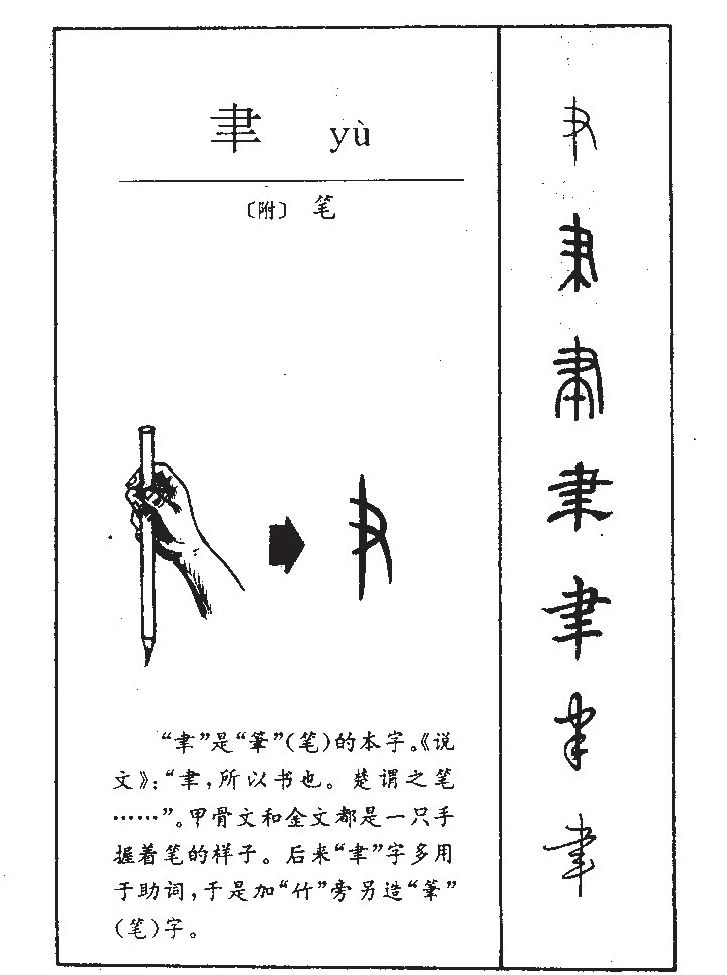
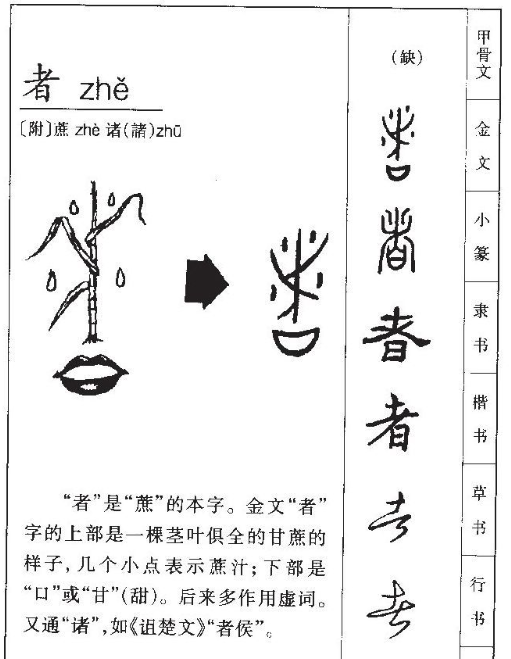
As an example the character for book (書) - is made up of 2 parts, the semantic part is 聿 (brush - in its original form a literal picture of a hand holding a brush) on top (so the word is related to writing or painting), and 者 on the bottom (the meaning of 者 is not important here (it was a picture of a mouth eating sugarcane originally, but lost this meaning long time ago), but 者 in Old Chinese was pronounced similar to the Old Chinese spoken word for book, so it serves a purely phonetic function here)
When Chinese writing was adopted in Japan, it wasn't really used to write Japanese - it was used to write Classical Chinese. Literate people would translate from Japanese to Chinese (which they would have been fluent in) and write it down in Classical Chinese grammar and vocabulary, not spoken Japanese grammar. They could also read it back and translate on the fly into spoken Japanese for Japanese speaking audience. They also brought in the Chinese pronunciation of the Characters into Japanese (in fact several different versions of this over time - see Go-on, Kan-on, etc.) so the phonetic hints in the characters were still useful when learning the system.
Attempting to write spoken Japanese using Chinese characters was difficult, initially they would actually use Chinese characters stripped of their meaning to represent Japanese syllables. These were later simplified to become modern kana
Spoken Chinese itself evolved beyond the monosyllabic written Classical Chinese (which remained quite rigid), so for a long time, Chinese also wrote essentially in a different language from how they spoke. It was only fairly recently that vernacular Chinese began to be written (rather than Classical Chinese) with it's polysyllabic words (most words in modern Chinese have 2 or more syllables, and require 2 or more characters to write, further distancing modern words from the original simple pictogram meanings)
So while the idea of some kind of universal abstract concept representation divorced from phonetics sounds intriguing, in practice it is a poor way to capture the complexity and nuance of spoken languages, and all languages (including Chinese) that attempted to adopt it ended up having to build various phonetic hints and workarounds to make the system actually useful and practical for writing.
I've heard good things about Indonesian/Malay. It probably helps it was a regional lingua franca for a long time.
English was legit the best choice in Europe - analytic, with vocabulary drawn from a couple major families, and (almost) no grammatical gender. If only we could unfuck the orthography...
One of the South American variants of Spanish, probably Argentinian. And I say that despite not speaking any Spanish.
The language itself is a contact language and heavily influenced by centuries of cohabitation with speakers of Arabic. That simplified a lot of the Indo-European complexities away.
The phonology - the sounds - of the language are clear and predictable and sufficiently different that a non-native speaker and their accent are not too troublesome in comprehension.
The language itself is already a world language, ranking 4th in number of native speakers.
I like the suggestion of Esperanto, which I do personally speak and which has all the advantages above, except already being a world language.
Latin, or even better, Klingon
All I know is "petaQ" and "Heghlu'meH QaQ jajvam", but I suppose that should be enough to get by.
Swahili speaker (native) here, fluent in English.
Language is a medium of communication between two or more parties. So long as they understand each other, all is good. whether they used klingon or Martian, it don't matter.
What i do know is that, if, hypothetically, internet throws a poll for people all over the world to choose language they will use for communication, every one, myself included, will hold their conner, defending how real and original the language that they are familiar with (and most definitely biased towards) is.
if you put it on a vote on the other hand, something different happens. In fact, it's been happening all along, silently and quietly at the back of our heads. From the first day surfing through the internet to buying your first own smartphone/laptop and choosing the default language for these devices, I know on my part I was driven by convenience. As the majority of media outlets use English. From the shows i watched to the role‐models i looked up on while growing up, they all circled around this fascinating slang that made them even more interesting. The internet's influence towards english made it easy (at least for me) to catch up real quick.
I will say this tho, hearing hakuna matata on the lion king was awesooome
One of the things that really excites me about the internet is its impact on the development of language. We're still at the very beginning of its impact, considering the timescale on which language has traditionally evolved, but I suspect that in time the advent of the internet will be considered a major inflection point in the history of language, maybe the single greatest inflection point in the history of language itself. All of a sudden, billions of people who otherwise would never have had the means to converse directly, are now able to converse directly with billions of other people all over the globe, in near real-time. I can't really imagine how that doesn't have a seismic impact on how human language evolves. I would love to jump forward in time a few centuries just to see how the things that are happening right now shake out in the long term.
Türkçe not gendered (at all, everyone and everything is "o") and one of the easiest languages to learn
I would argue no one could choose one. A lingua franca is silently agreed upon over long periods of time. No committee sat down to make old Frankish the language of trade, modern French the language of diplomacy, and nowadays English the language of internet arguments.
If I had a magic wand though my vote is Klingon as well. Qa'plah.
Lojban, or Toki Pona for shits and giggles.
French, we could all be a little more french when keeping our leaders on a leash
Sindarin
Lojban for now
Certainly not Esperanto
Interlingua
Klingon or Quenya, both sounds like music (just of different genres)
one that told me what that means. Seriously though an additional language or changing my base language?
Lojban, it's culturally neutral, and that makes it all the more nice. Plus it's got an interesting punctuation style.
Hmmm, looking at Lojban in a bit more detail it sounds like the consensus is that the conative load of having to construct perfect logical specificity makes it suboptimal as a secondary intermediary language. If people are learning it as a second language it will be very hard to pick up.
This seems like a pretty solid option. I feel like this type of algorithmic language construction could be ripe for a big push forward, both in terms of constructing new languages and benchmarking them for use.
A loosely moderated place to ask open-ended questions
If your post meets the following criteria, it's welcome here!
Looking for support?
Looking for a community?
~Icon~ ~by~ ~@Double_A@discuss.tchncs.de~