1
1
It’s over: Diamond Estate and Consignment Group reach settlement
(www.comicsbeat.com)
The distant call of seagulls and the gentle crashing of waves can be heard near these City Docks, where sailors from faraway lands and merchants visit. These docks are always busy, as ships are loaded up with shipments both mundane and rare...
Welcome to the City Docks! This map features a busy port in a city, featuring warehouses, a tavern, inn, and various other buildings next to the sea. Ships large and small line the docks, and a lighthouse sits at the far northwestern point.
I also included Night, No Ships, Polluted, Ruined, Storm, Under Attack, and Winter variants. Foundry VTT modules with pre-built walls and lighting are available to patrons.
Download this map in high-resolution for free here.
Want to see more maps? Check out my archive here.

cross-posted from: https://lemmy.ml/post/50533811
I've been thinking about the necromancer since getting my book and I think theres a lot of serious potential in the class.
Thralls strike with your spellmod which leads to many shenanigans including:
Instant flanking with puppeteer (create thrall lets you command them to strike)
Aiding yourself, esp. through gunslinger's Fake Out! https://2e.aonprd.com/Feats.aspx?ID=3161
Essentially being a legendary striker like gunslinger, operative, and fighter, but with delayed progression
The subclasses are interesting, but I think the top two are definitely Spirit and Blood. Blood helps you heal so you aren't a burden on the party. Spirit converts thrall damage to spirit damage, which is extremely nice if you get a Shining Symbol https://2e.aonprd.com/Equipment.aspx?ID=3109
The potential for the class is immense, as said, you are essentially a legendary striker (via thralls) with legendary spellcasting at the cost of less spells. The big issue is its hard to modify your thrall's damage.
Some archetypes I think will be good with necromancer:
Marshal: go dread marshal to buff spell and thrall damage
Beastmaster/Cavalier/Undead master/Captain : A nice, pale horse would be useful as necromancers are actually quite strapped for actions. They have tons of reliable 3rd actions and most spells will cost 2 actions and a mount will give some mobility. Sharpshooter follower would be great too, ask your dm if they can be a skeleton.
Commander: There's a lot of synergy in the low level tactics and feats. I wouldn't say to go too hard on the dip here. The tactics that stand out to me are Passage of Lines https://2e.aonprd.com/Tactics.aspx?ID=5 and End It! https://2e.aonprd.com/Tactics.aspx?ID=9. Passage of lines has pretty good use cases, you can put a thrall behind an ally to yoink them from harms way. Imagine if you use 'ready an action' to make the passage of lines to go off once an enemy is winding up for a strike, poofing your ally. Commander also has some choice feats, especially DEFENSIVE SWAP https://2e.aonprd.com/Feats.aspx?ID=7798, which lets you sacrifice a thrall to take no damage from an attack. That one has immense potential and is an extremely strong effect on a necromancer. I think plant banner https://2e.aonprd.com/Feats.aspx?ID=7796 also has utility use for keeping your allies up.
Gunslinger: As said, you can lean into an aid build and go gunslinger for fake out. This is an extremely effective way to crit enemies early in the game, I would go gunslinger if my party was short on strikers. I don't think the other feats are very worthwhile, I'd probably take defensive armaments. We don't really want to be striking ourselves (only through thralls), a gauntlet bow will suffice for fake out. Plenty of ancestries help facilitate aid bonuses.
Bellflower Tiller: Tiller's aid https://2e.aonprd.com/Feats.aspx?ID=933 gets you something similar to Fake Out at a much later level.
Spellcasting archetypes like Hedge Mage and Wizard: These let you diversify your spell choices a little. There are many great new spells and I will share my idealized necromancer spell list here in the future. However, Hedge Mage is a new archetype and really stands out. I'll let the dedication speak for itself
At level 14 they also get community needs, which is an interesting way to steal an upcasted fireball or heal spell on some classes.
When it comes to ancestries, you'll have a wide variety of choices. I think the best ones for necromancer will be ones that help buff aid.
- Human: Is a top tier choice just for natural ambition https://2e.aonprd.com/Feats.aspx?ID=4478 to grab Reach of the Dead, possibly one of the best feats in the game and gives necromancer insane flexibility. It also has a number of feats that buff aid, especially Cooperative Nature https://2e.aonprd.com/Feats.aspx?ID=4475
Elf: Has a lot of movespeed and flexibility if you do not have a mount.
Nagaji: Has a good aid feat.
Skeleton, Corpsefulk Heritage, Revenant background, Dhampir: Negative healing lets you take advantage of Necromancer's mastery of life and death AOE harms easily and it also means you are unharmed by your necrotic bomb
Starfinder has some interesting options too
Skittermander (funny) : Has overly helpful https://2e.aonsrd.com/feats/1191-overly-helpful
Formian: good aid abilities at 1st and 5th, additional reaction https://2e.aonsrd.com/feats/1449-called-to-help
Vlaka: increments aid bonus by 1, or 2 on a crit https://2e.aonsrd.com/feats/219-gifted-mentor Kinda nuts, especially if you get cooperative nature from another ancestry.
Shirren: free reaction for aid https://2e.aonsrd.com/feats/345-eager-assistant
Skittermander: one free action prep for aid https://2e.aonsrd.com/feats/361-helping-hand
I will share my spell and feat suggestions on necromancer soon.
https://paizo.com/threads/rzs8gfbh?YOU-CAN-PLAY-WITH-JIMOTHY-NOW
Our very own Jason Keeley has granted us all with the greatest gift; a JIMOTHY companion! This was just for a bit of fun, but now you can take Jimothy with you on your adventures in Pathfinder AND Starfinder! Scoop that little guy up!

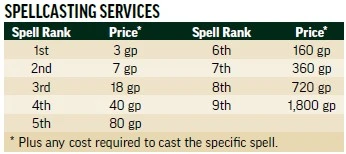
While the Player Core has straightforward prices for what it costs to hire someone to cast a spell, I've always struggled with what it would cost to hire ritual casters.
After all, rituals have rather big differences from ordinary spells:
So how do you price hiring NPC ritual casters? It would make the most sense to scale their daily fee depending on their skill bonus, but what is appropriate here?
And do they get paid for "time and material", or do they only get paid for successfully casting the ritual? The latter is far easier to calculate, while the casters will require a considerable "risk premium" for their service, and they might refuse to even make the attempt if the ritual is particularly difficult.
What are your thoughts on this?