Clearly you've never listened to mathematicians talk about infinities. Things get weird when you try to develop concepts around the inconceivably large and small. If infinity is a thought terminating cliche from your perspective, my suggestion would be to change your perspective.
I'd like to see ideas like this make a comeback, hopefully with some modifications this time around to protect our privacy and resist corporate exploitation.
We used to use del.icio.us and other variants to do exactly this before browsers had profiles. Back then, its primary draw was that you could take your bookmarks with you anywhere to any machine (this being before that function was baked into browsers and before web browsers could be carried in your pocket). The secondary effect was that you'd share and tag those websites with your own categories/descriptors, thus crowdsourcing a new version of the old web's link directories using Web 2.0. You could browse through symantic tag clouds to discover new things. Del.icio.us was for websites, but people were tagging and logging all of their favorite stuff and sharing it online so that like minded strangers could filled the gaps in their cultural awareness. We tagged our books with librarything. We tagged recipes with recipe thing. Audioscrobbler (later known as last.fm) logged our music listening to automate the tagging, not by direct symantic tagging, but by relational/temporal coincidence. If other people that listened to a lot of the stuff you listened to and they also listened to some other stuff you didn't, those became recommendations for you. That kind of relational algorithm would survive the slow death of Web2.0 to become the backbone of recommendation services like Spotify and probably even TikTok.
You've re-invented fried rice.
My go to trick was to cook my oatmeal in a pot with a lid so that I could steam a whole egg along with it. Just have to watch that it didn't boil so hard as to boil over. If you've got the 5 minute version of oatmeal, you'll have a soft boiled egg at the end, which I'd peal and toss back on top of the oatmeal after mixing in the other stuff I liked such and brown sugar, milk, raisins, and walnuts. It was a meal guaranteed to keep me full until a late lunch.
Art, of a sort.
No it doesn't.
Ever really destroyed your server because the it needed were available? I have. It was so much worse than a boot process that froze.
If Systemd was pausing due to a network share being down, it's only because I (or you) told it to do exactly that. There are lots of good reasons to delay the boot process until all drives the system expects to be there are actually there or the network is up. Cleaning up the mess that happens when the system does not check these kinds of things at boot is so much worse. It's never really some nebulous thing. Like it or not, intentional or not, the machine is doing exactly what you asked it to do and a delayed boot or a boot halted until you can solve the real problem is almost always better (or at least safer) than the alternatives. I've experienced all the things you've mentioned, dealt with each of those issues, and it was so much more of a hassle to diagnose before Systemd.
All tortoises are turtles, but not all turtles are tortoises. Generally tortoise implies that it is mostly land based, but it's not a rigorous definition. You can call all of them turtles all day long and still be correct, but that doesn't mean that American English doesn't still have the same connotations for turtle and tortoise that British English does.
After reviewing your post again, I don't recommend the cart I go on about below. Anything heavy and stable enough to support multiple monitors, is not going to be easy to wheel out of the way. And any wall, ceiling, or pole mounted monitor arms will be massive and expensive. Anything with wheels all around is going to be less stable than fat man on a tiny skateboard. Any little imbalance will send the whole thing to the ground. I'd probably just use a few of those portable (and lightweight) extra laptop screens.
I made a rolling server cart out of an IKEA BEKVÄM. The shelves were spaced just enough to fit my printer on one shelf, the UPS and network gear on another, and the server (in an htpc style case) on top. It's heavy, with the heaviest part (the UPS) taking the bottom shelf. True, it only has 2 wheels, but it's built like a tank and rolls around easy enough without feeling like it's going to fall apart. The cart spends most of its time tucked in a corner, but the wheels make it easier to pull out to work on the various things connected to it. A monitor currently only sits on top, but given the weight of the UPS on the bottom shelf, I would not be afraid to mount some simple monitor arms that don't extend too much.
Side note: Trackball mice work a lot better where mouse pads fear to tread like couches, laps, chairs, even standing. I use a mouse all day for CAD work so these things have made it worth the adjustment from standard mouse: it being in the same place on my desk every time, being able to relax my arm and shoulder while moving the mouse across 3 monitors, and being able to use my laptop in the field from the seat of a vehicle. I have a Logitech Ergo with Bluetooth and a dongle (several actually), one at each desk or couch and one in my work bag.
That's not true at all. American English absolutely differentiates them in exactly the same way.
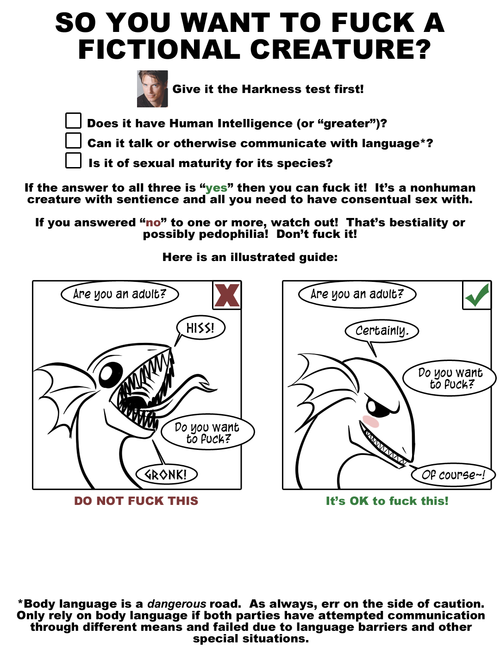
Give em The Harkness Test

It was happening long before TMNT. Transformers, He-man, Teddy Ruxbin, Gummie Bears, She-ra, Care Bears, etc. I'm no expert on which was the first, but I'm sure that the kids that watched it would be too old to really get into TMNT once that IP hit the market. TMNT wasn't even really inspired by toys, the comic was first, they just heavy exploited the toy market later. Shows like Care Bears and transformers were created specifically to sell toys as opposed to designing toys to sell a show.