4
What’s next for Rabbit? Employees haven’t been paid
(www.tomsguide.com)
Peter Thiel has confidence that his own personal power will keep him safe. Since he's a sociopath, having homosexuality be illegal actually benefits him because if he gets tired of a relationship he can just out the other man and have them executed.
It's not entirely clear to me whether history supports his confidence. But little no-name "activists" like the article author are always going to be destroyed.
Hatred Enterprise Linux being marketed to the US gov
The turbo-hell part is that the spam comments aren't even being written for humans to see. The intention is that ChatGPT picks up the spam and incorporates it into its training.
I worked at a company that sold to doctors and the marketing team was spending most of their effort on this kind of thing. They said that nowadays when doctors want to know "what should I buy to solve X?" or "which is better A or B?" they ask ChatGPT and take its answer as factual. They said that they were very successful in generating blog articles for OpenAI to train on so that our product would be the preferred answer.
She absolutely is profiting from it.
When a game is "free" the publisher isn't just donating it for funzies. Either Epic pays them (Epic is spending money to get people to its platform) or the publisher is using the game to advertise other games, which has value to them.
"Why would anyone in Europe care?"
I think the point of it would be to signal to Trump that Europe is his vassal. Trump says it's sad that this guy is dead, therefore Europe is sad. Doesn't really matter who it is or what's up. You're just following the pledge of fealty.
So, I think it's good that the EU decided they're sovereign for now. This sort of thing is always an ongoing project.
To be fair: it's all the Republicans casting the deciding vote. She doesn't have any special powers that makes her vote count more than the rest. The difference is that she's occasionally not-shitty and so she gets a lot of attention as a maybe.
Like: Rick Scott also cast these deciding votes, but everyone already expected that he'd be a shit so he doesn't get any flak for it.
I think the US will be fine as long as we don't repeatedly elect some kind of cabal of pedophile authoritarians.
There's a lot of externalizing of costs going on. The trucks are idling because the drivers are operating at the slimmest possible margin under the assumption that idling doesn't cost anything.
What we actually would want to get to is that idling does have a cost (environmental, health, pleasantness of the area, etc). And that cost ought to be passed up the chain so that the various goods being shipped are more expensive.
But without a more centrally-managed economy, the implementation is to put all the pressure on the truck drivers and leave them responsible for passing that pressure to the next step up the chain. It doesn't work out very well in practice because the drivers need to make a bunch of capital expenses for something like adding a cab AC and adding a batter-powered lift, but they've been operating at low margins so they're not in a position to do it.
I don't think the article summarizes the research paper well. The researchers gave the AI models simple-but-large (which they confusingly called "complex") puzzles. Like Towers of Hanoi but with 25 discs.
The solution to these puzzles is nothing but patterns. You can write code that will solve the Tower puzzle for any size n and the whole program is less than a screen.
The problem the researchers see is that on these long, pattern-based solutions, the models follow a bad path and then just give up long before they hit their limit on tokens. The researchers don't have an answer for why this is, but they suspect that the reasoning doesn't scale.
Though, do be careful because there are abusive same-sex relationships and sometimes it's even harder to get away because the people around you are telling you "but women can't be abusers!"
As a programmer, DST creates tons of bugs for anything using time and is annoying. But whatever, I guess I get paid either way.
As a parent, DST is miserable. It's miserable as an adult, also, but multiplied misery when you have to get up early to ruin your kid's sleep. And then that night they're not ready to suddenly go to sleep an hour early so you lose an extra hour...
I hope Poland succeeds.
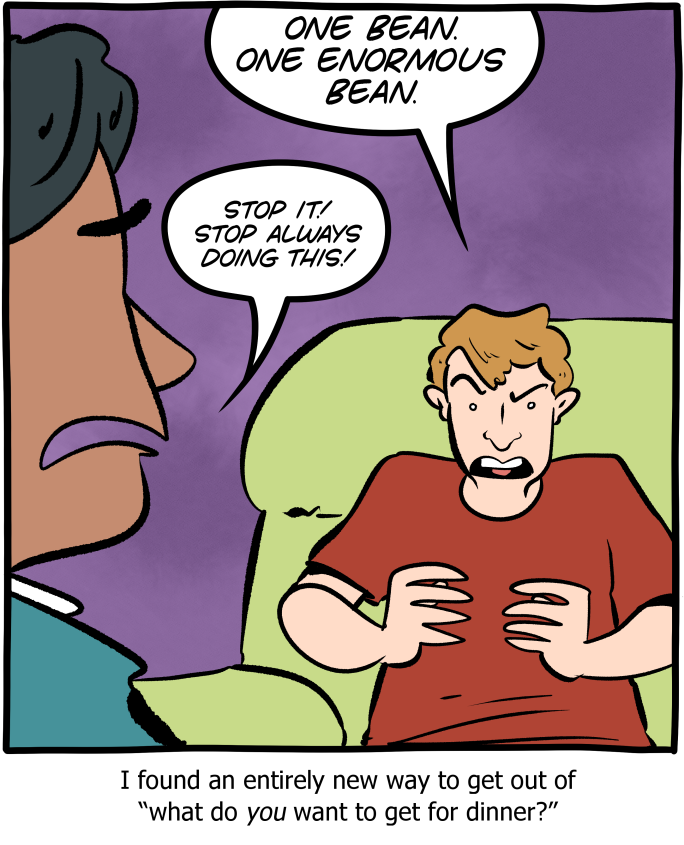
"I found an entirely new way to get out of 'what do you want to get for dinner?'"
100%
Also the "it wasn't a fear-based decision, I just rationally opposed all the forced child gender-transitions". It's not possible to roll ones eyes hard enough.
I actually do have empathy for a TERF who'd say, "I uncritically chugged conservative media and become terrified of stories about men 'transitioning' as a way to attach women. Now I see that was all lies and I was a fool who never tried putting myself in others' shoes."