42
EX-11: Prepping for Plasma’s Last X11-Supported Release – David Edmundson's Web Log
(blog.davidedmundson.co.uk)
Hah, every time I try to switch to Wayland on my Debian 13 desktop I end up going back to X11. Wayland ultimately feels slower and more sluggish compared to X11 almost like a regression that occurs over time, applications that work on X11 may not work on Wayland and in my situation open but display a blank screen and, recently learned MangoHud that ships with Debian 13 has issues capturing the GPU usage while running games.
Hmm.. just found out that the only two video backends that can correctly display 10-bit full color range videos for me are VDPAU and x11, both unavailable on Wayland.
I really want to run wayland but there are still some missing bits required for my workflow. Of particular importance to me, the ability to connect to RustDesk auto-launched on a headless server, and clipboard sharing in DeskFlow. My understanding is that these are still broken only because the devs are still waiting for wayland back-end additions to be implemented.
I'm all for wayland, but they need to catch up first.
Not sure how your clipboard is broken, it works using KDE connect. DeskFlow may need to work on implementing the Wayland bits.
I also switched to Wayland when the news came X11 would go away. It just sucks they aren't fixing all the input issues on Wayland, especially since I'm using touchpad most of the time.
95% on Wayland is a bit hard to believe, 100% of KDE users I know both use X11.
Well, now you know one who doesn't and hasn't for years
And now two! Touchpads work like a dream for me
I also use wayland on both my laptop and desktop.
The only issue I have is the lack of some utility which I can use to type my german umlauts using macros. On windows I had an autohotkey script so that alt + a would become ä and so on.
I've tried a couple programs that work on wayland, but without success in getting them to work how I wanted. The last time I checked there were a couple promising candidates left that are explicitly not working on Wayland though.
This reads like quite a different workflow, but AFAIK the standard in both x and wayland for inserting special characters is using a compose key. You can set up a key as the compose key in the keyboard settings of any de/wm/compositor (right alt in my case) and use it in a key sequence to assemble special characters. I use it all the time to type italian accent characters on a us keyboard and it's always dependable and quite intuitive even for characters I don't regularly use.
Some examples:
compose a " → äcompose e ' → écompose c , → çcompose o o → °compose - > → →I'm not saying your use case is invalid, but it falls well into unsupported territory I feel like, and reminds me of this.
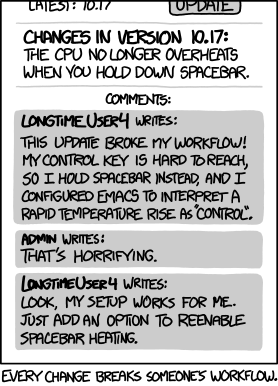
This said, there must be a way for an application to simulate input, that's what virtual keyboards do, including steam's virtual keyboard which is not integrated in the desktop environment, so your workflow can likely be replicated. You might need to spend some time finding the right tool for it, or possibly creating your own, but wayland and plasma wayland in particular have all the bits in place to make this happen.
I am aware of the compose key, I was just never a fan of it. I have it set up to replicate my previous autohotkey script on my laptop but I found that in some rare cases, pressing the next key for a word I am typing would change the letter from what I intended to something else.
Using the compose key like 'compose + " a' also feels unintuitive to me and introduces one more key for me to press, though I could likely get used to it with some effort.
Your best bet might be a keyboard with QMK/VIA support. Bake those shortcuts directly into the keyboard firmware.
so if everyone in the world used kde, "only" the usa would be on x11.
meanwhile i still get random blackouts, frame rate desyncs, and sleep mode crashes when running wayland.
I moved to labwc in my migration from X11. Gnome/KDE felt less stable on wayland. In a way it makes sense that transition is more painful for big full of features DEs.
yeah, the bigger DEs use more X11 features that they now have to build themselves.
Are you on plasma 6.6?
Also "The metrics also show that basically no one is testing or developing Plasma on X11 anymore. The platform was already, for all intents and purposes, abandoned by KDE contributors." There just isn't the man power to keep supporting it
i know all the reasons that switching to wayland is imperative for the distros. i also know that it still has massive gaps in the implementation that are required of a working desktop, like accessibility. it's been almost 20 years and yet here we are.
I think I'm on Wayland and it's been fine?
happy for you.
Ty!
so if everyone in the world used kde, "only" the usa would be on x11
you're right, they shouldn't support imperial measurements
Interesting, what hardware do you run?
I haven't used Plasma for any significant length of time since 5.27. Coincidentally, the first major version of Plasma where Wayland was actually daily drivable for me, previous versions would have at least one desktop crash a day.
But my experience on Gnome Wayland has always been good. At least, better than X11, even on NVIDIA before the Wayland compatibility was "good". Don't remember exactly dates or version umbers, but it was shortly after it got hardware accelerated Xwayland and before NVIDIA added GBM support. And when I switched to AMD, it only got smoother and more stable.
And recently have been trying out labwc/wlroots and it's been a very stable experience too.

i mean it's better now, used to not be able to show the greeter. when i set this machine up i had to change the session through the tty.
Not to mention still absolute crap support from commercial software.
Looking at you, ~~VMware~~ ~~Broadcom~~ Omnissa.
Wayland is a mess for me with Plasma 6 (Fedora) but i'm not going back to X11. Quite a few features i use(d) have been broken along the way.
On the upside high DPI support is getting better and better
From Wikipedia, the free encyclopedia
Linux is a family of open source Unix-like operating systems based on the Linux kernel, an operating system kernel first released on September 17, 1991 by Linus Torvalds. Linux is typically packaged in a Linux distribution (or distro for short).
Distributions include the Linux kernel and supporting system software and libraries, many of which are provided by the GNU Project. Many Linux distributions use the word "Linux" in their name, but the Free Software Foundation uses the name GNU/Linux to emphasize the importance of GNU software, causing some controversy.
Community icon by Alpár-Etele Méder, licensed under CC BY 3.0