276
Class war solves most issues
(lemmy.ml)
cross-posted from: https://lemmy.ml/post/51623256

Discussion of climate, how it is changing, activism around that, the politics, and the energy systems change we need in order to stabilize things.
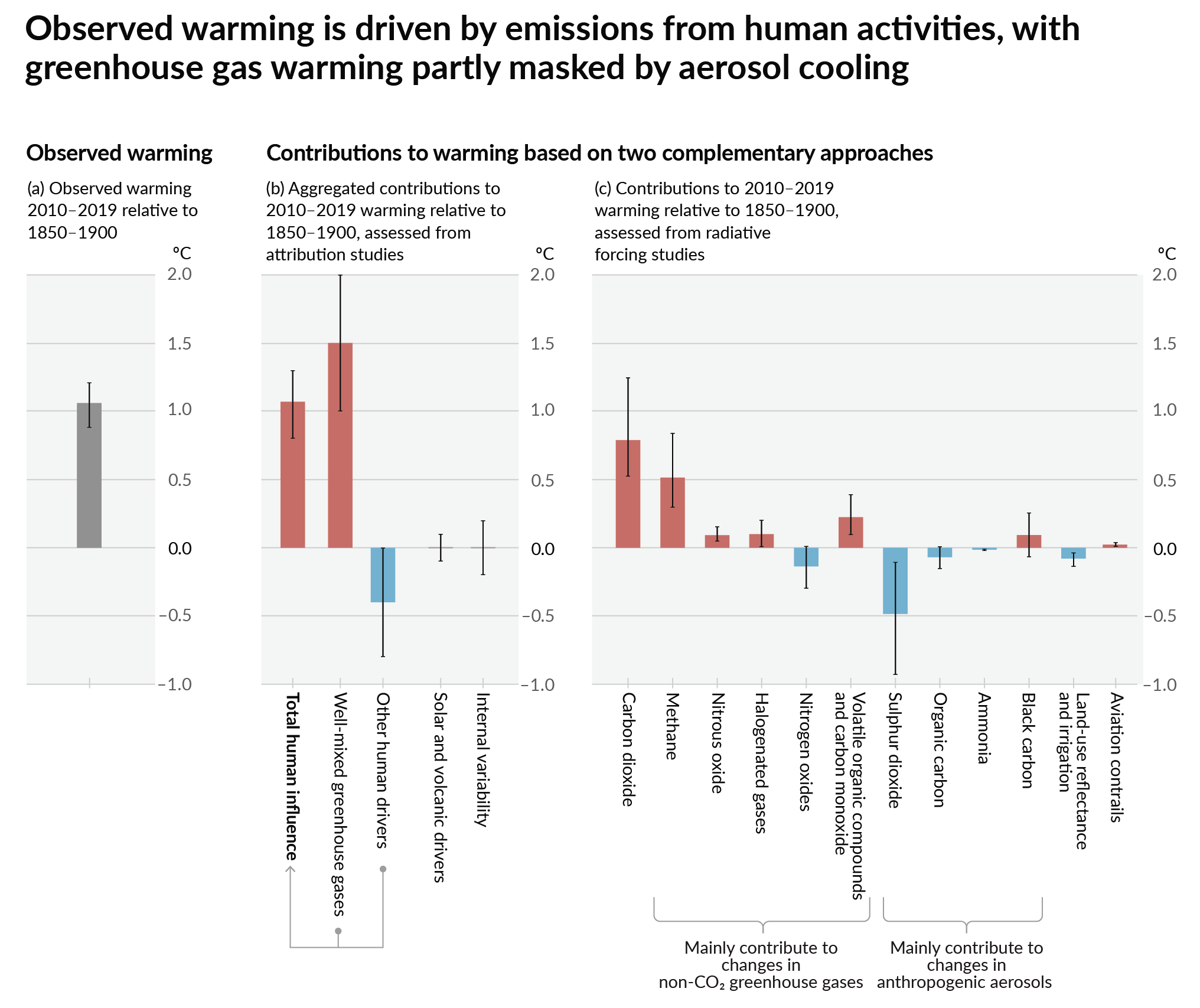
As a starting point, the burning of fossil fuels, and to a lesser extent deforestation and release of methane are responsible for the warming in recent decades:
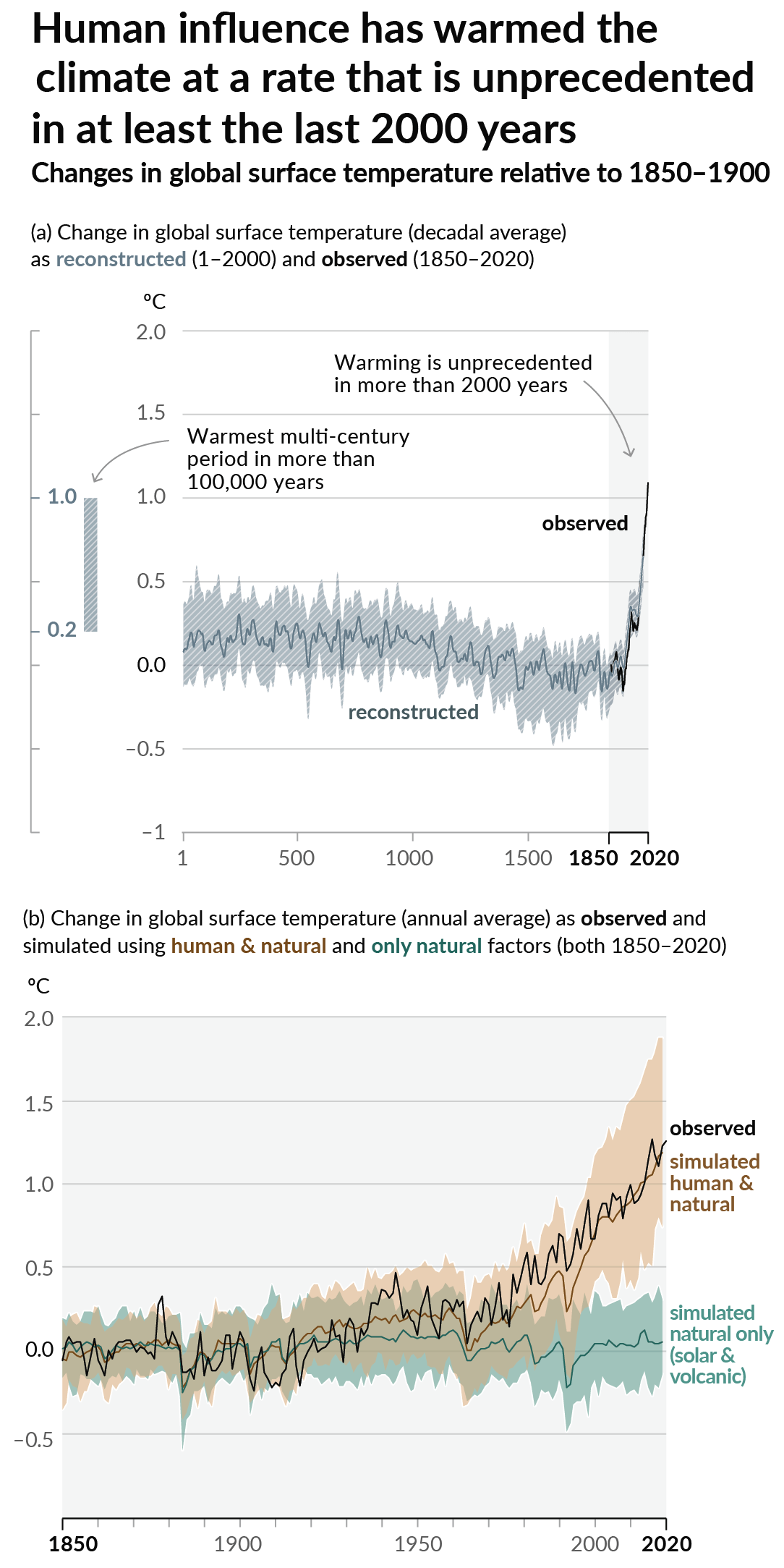
How much each change to the atmosphere has warmed the world:
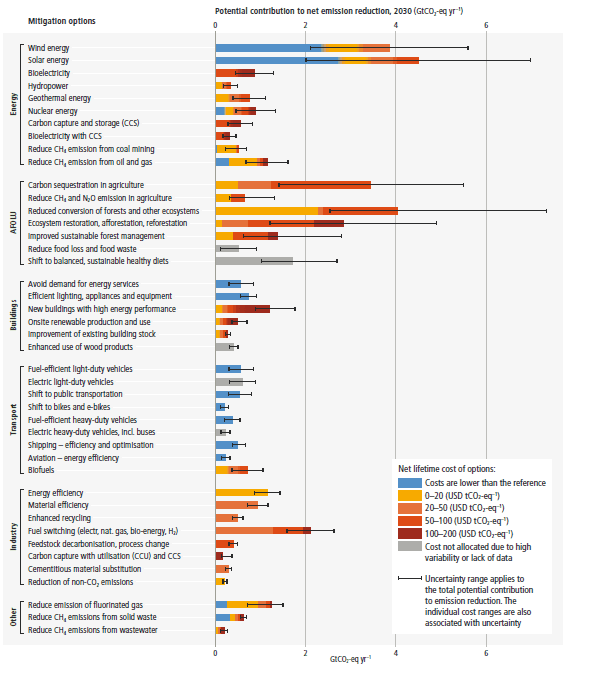
Recommended actions to cut greenhouse gas emissions in the near future:
Anti-science, inactivism, and unsupported conspiracy theories are not ok here.
One thing to keep in mind here is that "the wealthiest 10%" includes everyone in the western world who makes even a dollar above the median income. Global warming is a far bigger problem than just a couple billionaires. You could abolish billionaires and convert everything to employee owned collectives or something, and the energy use problems will still exist unchanged.
If there is no need for profit there will be no need for infinite growth on a finite planet.
No need to push people new phones every year so their old one goes into the trash, etc etc
The global 10% income threshold is about $70k.
Just so we are clear the global population is about 8.3billion. So there are about 830million in the top 10%. The US has a population of 340million, the EU of 450million and there are some other countries like the UK or Canada. Then there are some rich countries like South Korea, Japan, Saudi Arabia, South Korea and so forth, which also have large populations. Also obviously there are plenty of rich people in poor countries as well. Especially China will make up a good chunk of the global top 10%, just for being upper middle income and a country with a huge population.
In other words it is not being above median income in the West, but somewhat above that.
Median household income was $83,730 in 2024
That's going to include dual income households as well as single income, so the $70k threshold for being in the top 10% may actually include some people below median, depending on what the distribution of single vs dual income households happens to be.
Point being, since we're being pedantic today, is that being anywhere above median income in a developed nation means you are likely in the global top 10%.
Yeah.... the Median individual income is only 45k. So it kinda depends if the 70k threshold was accounting for household or single. If it's just a single income then around 75% of Americans would not make it to the top 10%.
Household income is kinda a skewed way to evaluate income, especially considering that a lot of households do not share expenses equally. Younger generations could have 5 roommates and not make the 85k median.
Oh by "western world" you meant the US and not developed country or european culture country.
True. But if the largest economy in the world wasn't actively trying to sabotage green solutions and promote oil use and environmental destruction as a result of billionaires' influence, it would be a big plus.
As if the employee-owned fossil fuel syndicates and weapons manufacturer syndicates and car manufacturer syndicates and road construction syndicates and plastic processing syndicates wouldn't be trying to sabotage green solutions just as hard. As if the warehouse logistics syndicate couldn't use its monopsony to bully manufacturing syndicates into making the shittiest products for them and their monopoly to get those shitty product to the masses. And as if a liberal democracy like the US wouldn't be just as corruptible by these syndicates resulting in the state actively trying to sabotage green projects as well.
There is no reason for employee-owned syndicates to be more of a force for good outside the workplace than pension funds. Most workers with even the slightest profit motive invest in weapons for genocide, pollution for profit, and housing as a speculative form of income. If a syndicate was bad for the environment, that syndicate would fight to continue existing as long as it was profitable for the employees to do so.
Don't get me wrong, it's nice that the employees get their fair share of the blood money. But capitalism redistributes wealth from the kind to the selfish whether they're individuals, corporations, or syndicates.
Only one way to find Out. But Something tells me a certain group of guilty people is fighting tooth and nail we wont ever truly find out...
Ooh, what way is that? Theoretical material analysis? Small-scale trials? National-scale trials? Polls? Analogies to the real world?
Oh, you want the entire world to engage in a violent revolution to overthrow the powers that be so we can hand all that power over to the employees of a couple multinationals?
If every Corporation should allow Unionization that would be start. Everything else comes after step 5.
True and I was going to post something similar. One thing to keep in mind though is that the abolition of billionaires or more broadly speaking the capitalist class would enable the possibility of a totally different economy where profits are no longer the only goal. This could result in a more efficient way of doing things and therefore drastically reduce our negative impact on nature.
The capitalist class aren't cartoon villains; they're normal people. Changing the system to get rid of them isn't going to magically get rid of the human preference for the easier path. People aren't going to just suddenly wholesale agree to take the long view and do things the more expensive, but more environmentally friendly way. And when I say "more expensive" I don't mean the added expense of corporate greed. Even after you take out that factor, a lot of the expense comes from the simple difference in energy density.
I don't think anyone is claiming that removing capitalism would magically make environmentally friendly choices effortless or eliminate human preferences for convenience. The point is that the system determines what gets treated as the "easy" and "cheap" option in the first place. If an economic system rewards short-term returns while externalizing long-term environmental costs, then of course the dirty option tends to win. That's a structural issue, not a question of whether individual capitalists are cartoon villains. Physical constraints are real, but they're not an argument for treating the current economic incentives as inevitable.
I think you may be extrapolating in the wrong direction from my comments.
My main point isn't that the status quo is inevitable or anything like that. I'm trying to keep people focused on the whole problem, not just "eat the rich" type sloganeering. It's going to be a multiple generation endeavor to fix the environment, even if we magically started doing all the right things now. If we keep keep presenting it as something that can be solved by just getting rid of the rich, we're going to run into a whole new batch of problems when that doesn't work.
Yeah, I think we're mostly on the same page about it not being as simple as "get rid of the rich and problem solved."
Where I think we differ is that I see capitalism itself as probably the biggest hurdle. Not because people in capitalism are inherently bad but because the system's incentives are fundamentally at odds with living sustainably. I don't think changing that magically solves everything but I do think it's a prerequisite for solving the problem in the long run.