this post was submitted on 10 Aug 2026
245 points (100.0% liked)
politics
30743 readers
1754 users here now
Welcome to the discussion of US Politics!
Rules:
- Post only links to articles, Title must fairly describe link contents. If your title differs from the site’s, it should only be to add context or be more descriptive. Do not post entire articles in the body or in the comments.
Links must be to the original source, not an aggregator like Google Amp, MSN, or Yahoo.
Example:
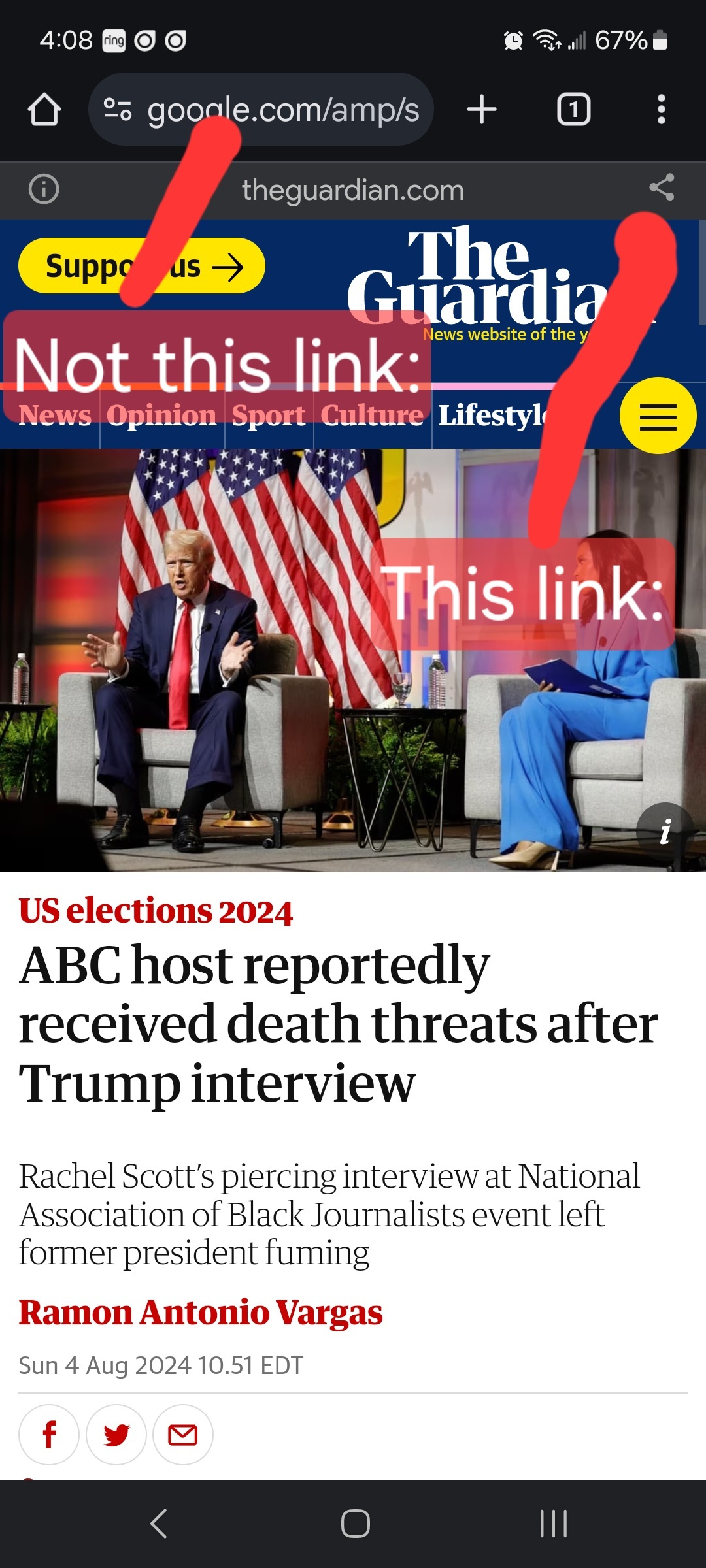
- Articles must be relevant to politics. Links must be to quality and original content. Articles should be worth reading. Clickbait, stub articles, and rehosted or stolen content are not allowed. Check your source for Reliability and Bias here.
- Be civil, No violations of TOS.
It’s OK to say the subject of an article is behaving like a (pejorative, pejorative). It’s NOT OK to say another USER is (pejorative). Strong language is fine, just not directed at other members. Engage in good-faith and with respect! This includes accusing another user of being a bot or paid actor. Trolling is uncivil and is grounds for removal and/or a community ban.
- No memes, trolling, or low-effort comments.
Reposts, misinformation, off-topic, trolling, or offensive. Similarly, if you see posts along these lines, do not engage. Report them, block them, and live a happier life than they do. We see too many slapfights that boil down to "Mom! He's bugging me!" and "I'm not touching you!" Going forward, slapfights will result in removed comments and temp bans to cool off.
- Vote based on comment quality, not agreement. This community aims to foster discussion; please reward people for putting effort into articulating their viewpoint, even if you disagree with it.
- No hate speech, slurs, celebrating death, advocating violence, or abusive language. This will result in a ban. Usernames containing racist, or inappropriate slurs will be banned without warning
We ask that the users report any comment or post that violate the rules, to use critical thinking when reading, posting or commenting. Users that post off-topic spam, advocate violence, have multiple comments or posts removed, weaponize reports or violate the code of conduct will be banned.
All posts and comments will be reviewed on a case-by-case basis. This means that some content that violates the rules may be allowed, while other content that does not violate the rules may be removed. The moderators retain the right to remove any content and ban users.
That's all the rules!
Civic Links
• Register To Vote
• Citizenship Resource Center
• Congressional Awards Program
• Federal Government Agencies
• Library of Congress Legislative Resources
• The White House
• U.S. House of Representatives
• U.S. Senate
Partnered Communities:
• News
• World News
• Business News
• Political Discussion
• Ask Politics
• Military News
• Global Politics
• Moderate Politics
• Progressive Politics
• UK Politics
• Canadian Politics
• Australian Politics
• New Zealand Politics
founded 3 years ago
MODERATORS
True. Ranked choice is progress. My problem with it is that still makes polarizing politics an advantage.
Example: 3 candidates run, A is leftwing, B is more center (leftwing or right leaning), C is right wing. A and C both get 40% of rank 1 votes because they benefit from the polarized atmosphere, B only gets 20% of rank 1, so they are eliminated and their voters are run off to either A, C or dropped if they didn't pick a second candidate.
Say after runoff A has 44%, and C has 45%. Or vice versa, it doesn't matter. The winner doesn't even have support of the majority of voters and polarized politics continues to be an advantage. But if you look at those who voted for A or C as their first choice, of the 40% for A 25% had B as their second, and of the 40% for C 18% had B as their second. So 43% of the voters gave a ranked 2 vote for B and 20% gave a ranked 1.
Approval voting is similar to ranked choice where you vote for every candidate you would be happy with. But you don't rank them and there is not elimination and runoff. You just give 1 vote to every candidate you would approve of and the highest wins. So let's look at the results with approval voting.
A has 44% approval. C has 45% approval. And B has 63% approval. B is the clear winner, despite being the first eliminated in Ranked Choice.
If the goal is to have a representational government that is approved of by the governed, whete oppositional polarizing politics holds less sway, then Approval voting is the goal to shoot for.
Few people want B over their extreme I think. They want their lesser desired B vote to run off to A. Approval disproportionately advantages the middle, least desired by all parties.
Well first, the middle is where it should be pushed if representational goverment is the goal. They should represent the most people. Not the most popular minority group on election day. But also, it can work in favor of the the more extreme candidate too when the electorate feels like the more central, safer option has the better chance and vote accordingly.
Example, the Socialist candidate is charismatic, popular, and has good ideas, but the term socialism leaves people uneasy or unsure if they can get enough support. So under Ranked Choice, many hedge their bets and vote Democrat as their first rank and the socialist as their second. 12% for as first rank for the socialist, 55% for the democrat, and 33% for the republican. After runoff, the socialist is elminated and dems win. But with approval, 45% of the 55% of dems actually approve of the socialist. Now the socialist has 57% support. The results then entirely hinge on on how many socialist first voters also support dems.
In such a case, shouldn't they have voted 1 social 2 dem? Approval voting is fine, it allows cross aisle winners which are impossible now, but definitely has the chance of being a weak middle that's always walking on eggshells.
I personally wish we used issue voting: each candidate takes a test, then you take a test, and an algorithm matches your answers with the candidate to avoid a huge number of problems with media driven campaigns.
Not if you think socialist won't get enough/majority support. There is still a spoiler effect with ranked choice due to the elimination.
Imagine socialist gets 35% of first choice, dem gets 28%, republican gets 47%. Dem gets dropped but only 6% of the 28% also ranked the socialist. Then republican wins. If you are being strategic and expect that sort of outcome, even if you prefer the socialist, you still might ranke the dem as a 1 to prevent that occurrence and ensure that at least your second choice wins.
Approval is more idealistic, but it also incentivizes idealism and cooperation. If people don't approve of you or the job you have done, they don't vote for you when they have a better alternative. And people of different parties can campaign together, boost one another, cooperate to get stuff done, etc. and boost their own approval numbers in the process.
And I don't hate the issues based idea, so long as the tests, questions, and results are not controlled by any political bodies and have completely open processes for oversight. And there is also no reason that such compatibility and approval voting couldn't coexist either. In that case the approval would be based on the policy positions, not the individual. There are kinks to work out there. For example, if someone lies on the tests, or you agree with them on the majority of the policies, but have other valid reasons to not support them like a particularly important policy for you that they differ on, or they have a criminal history, etc.