1
20

Yesterday I discovered a pot that had gotten moved to an unexpected location, full of what I thought was a "handful"of baby lavenders. After splitting them all into their own pots, I now have 45 baby lavenders. Whoops.

Our self-seeded salad beds are bumping along after some rains and cool days, and I think I'll get a few more rounds of harvests in before they start bolting. I'll have to redo my peppers though. This morning was spent cutting back some of the stuff in our area with living pathways to feed to the veggies, chop 'n drop style.

This afternoon I'm going to hide in the shade (supposed to get up to 90° F) and split out some mob pots with New Jersey Tea and passionfruit (P. incarnata) seedlings. We're a ways north of the passionfruit's native range, so these are more for experimentation than for sales.

What's growing on with you all?

2
34
I miss the night (beehaw.org)
submitted 6 hours ago by jay2@beehaw.org to c/greenspace@beehaw.org

I camped up on the plateau last night. First time camping in maybe 8 years and haven't camped up there in closer to 40. It was weird though. No crickets. No tree frogs. That iconic wall of noise at night. Gone.

The only sounds were intermittent motorcycles, trucks, trains, barges and planes. Everything you don't want to hear and none of the things you do.

It was depressing. It's been bothering me all day and we had them last year. Is it just my area or is this the new norm?

3
42

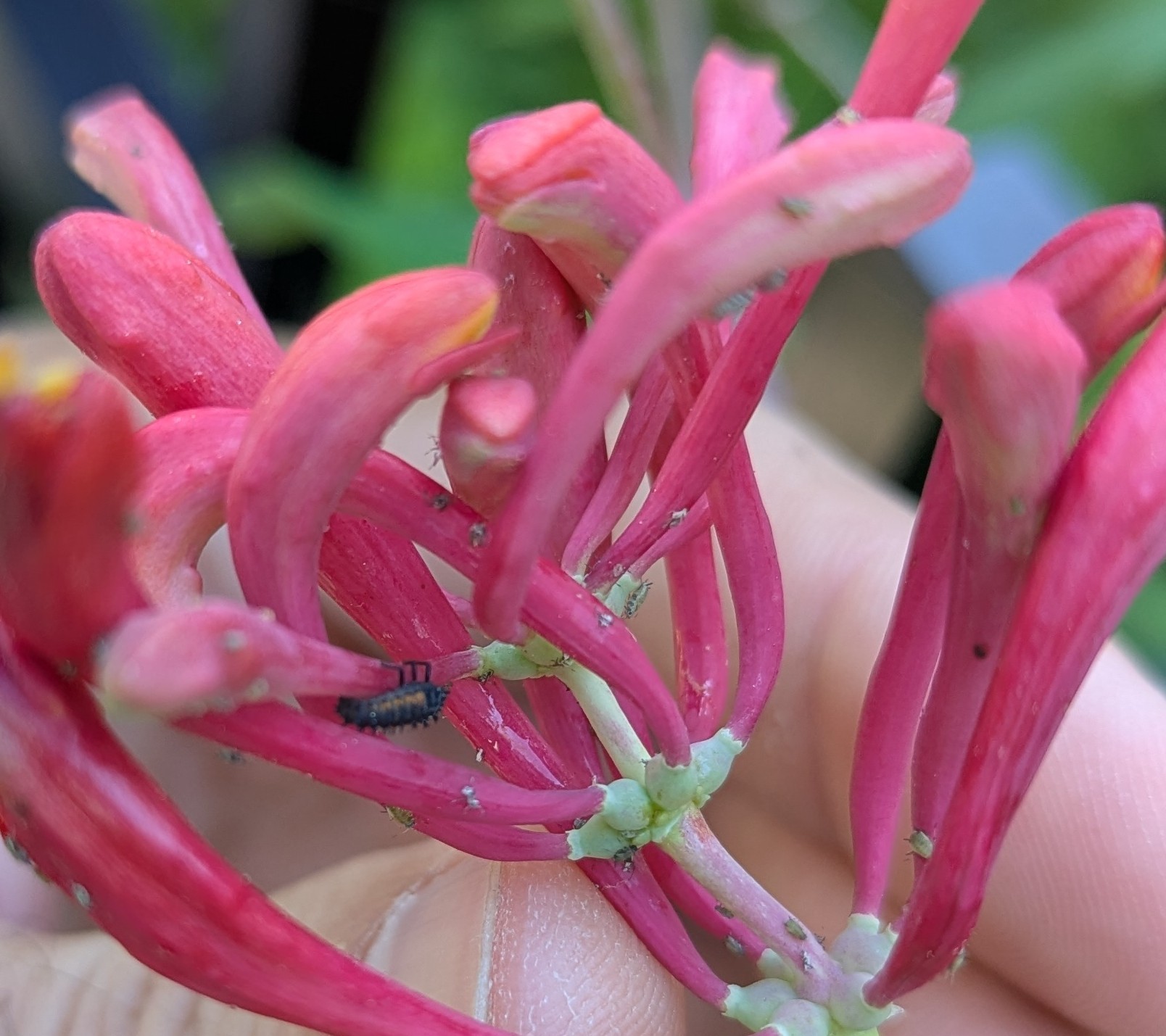
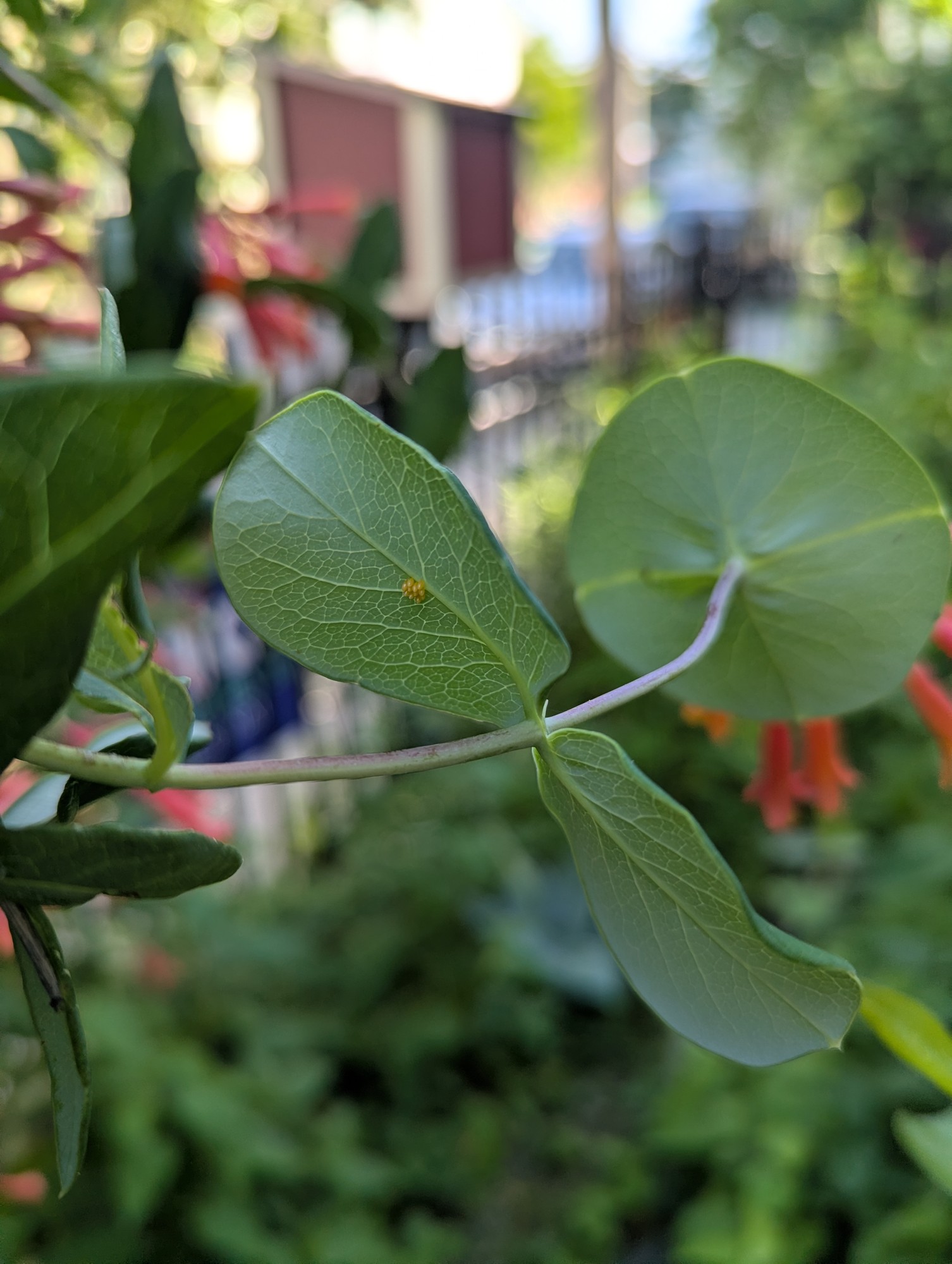
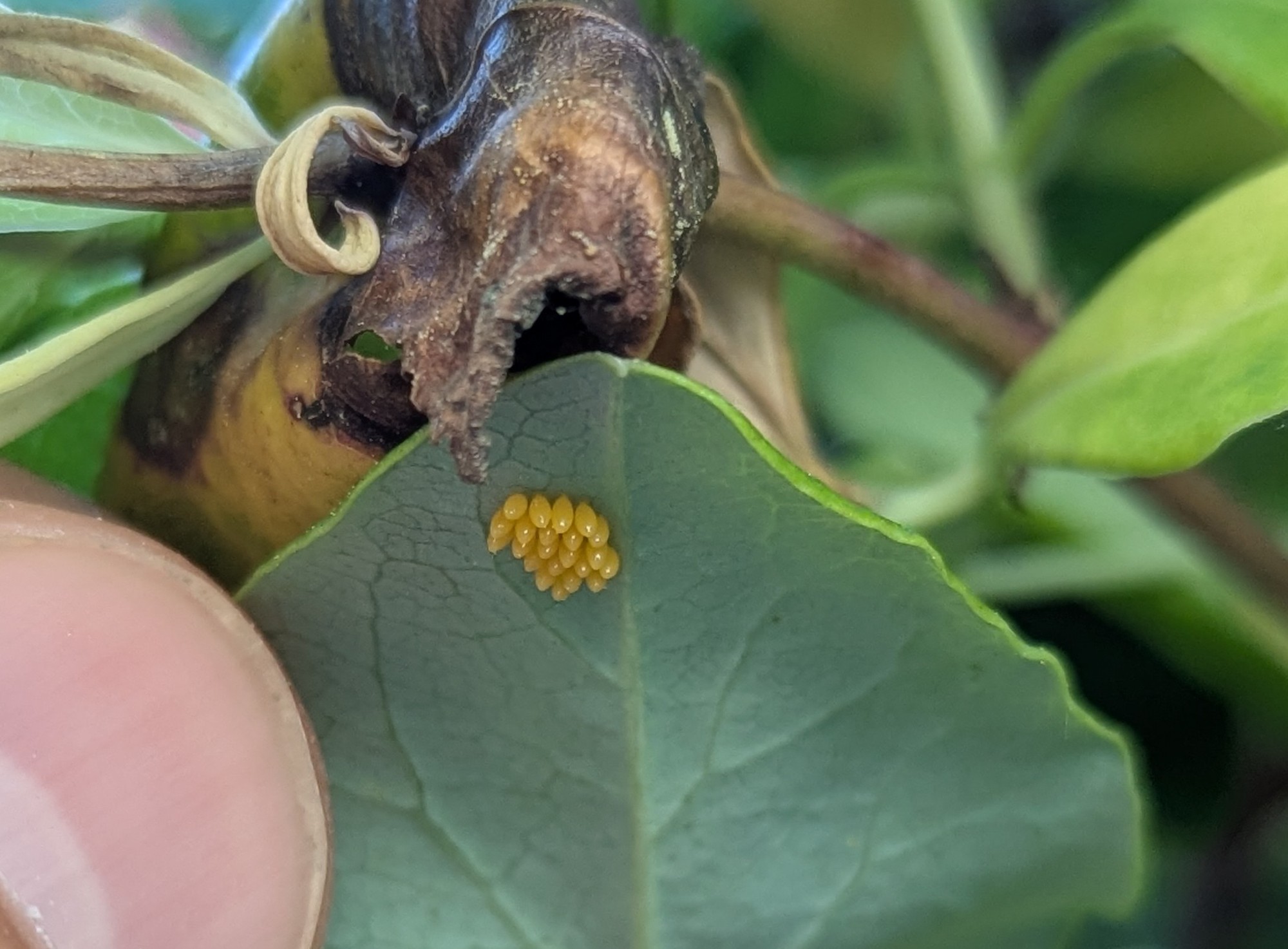
We introduced two batches of 300 ladybugs a couple weeks ago, and now we have a thriving ladybug lifecycle.
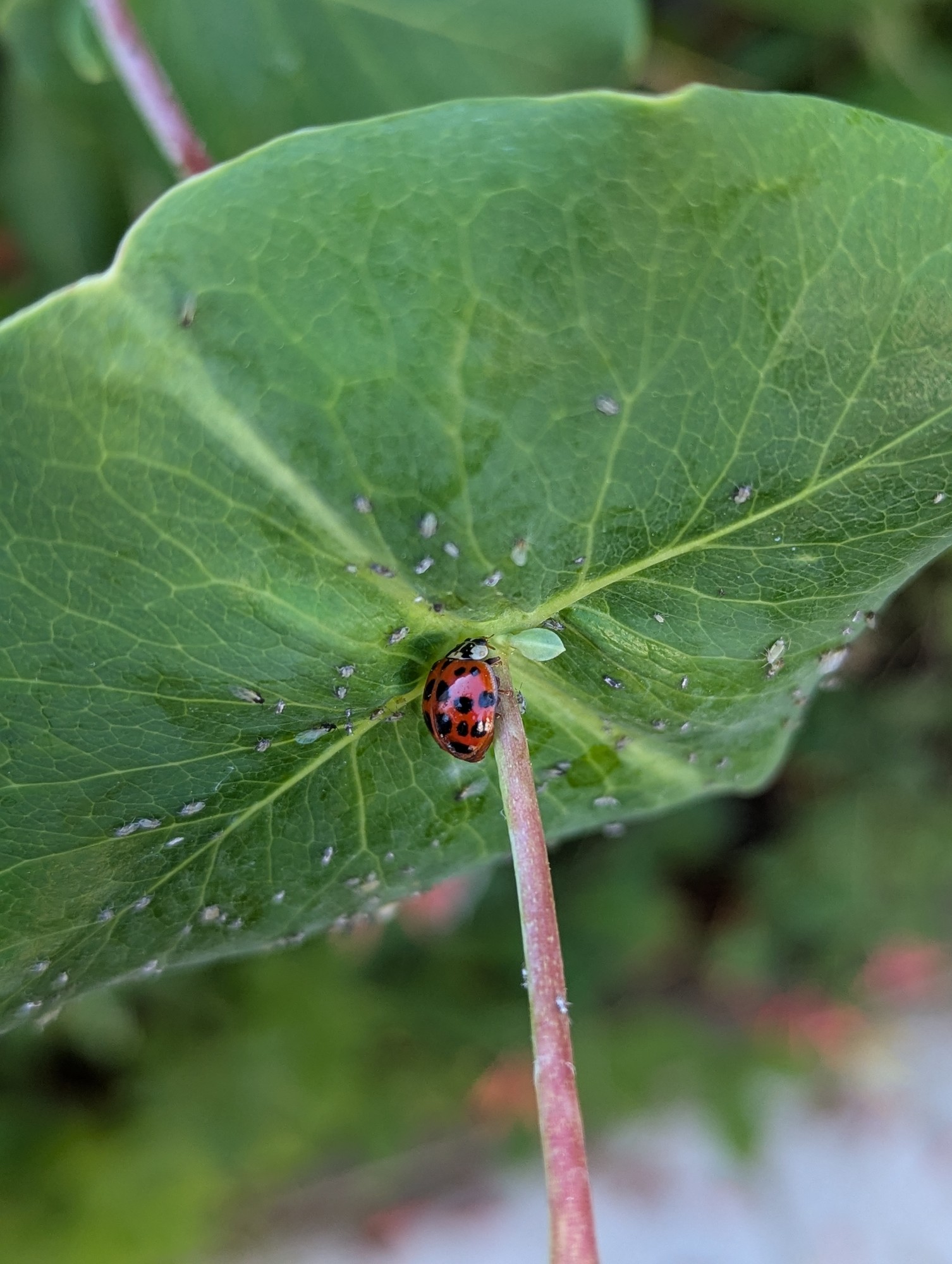
adult

The larvae do most of the eating.

larva

Eggs are hard to spot.

eggs

4
32

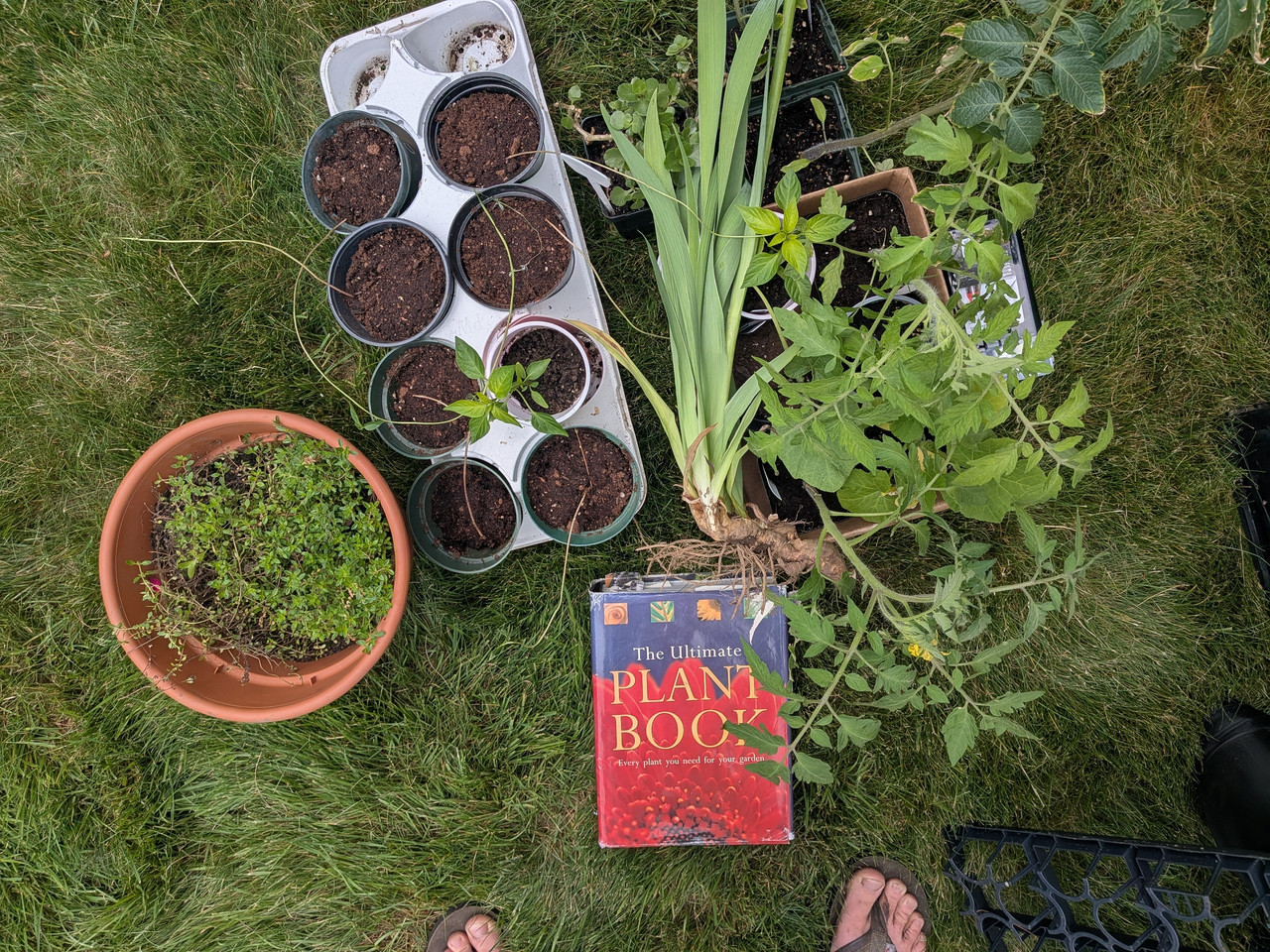
I brought home several many more plants than I donated, plus another book I have no space for. It's been nice knowing you plant nerds o7
5
14

This morning's plant sales got pushed to next weekend because of high winds and low temps, so I brought home all the shallow tomatoes that were donated so I could repot them. They'll go back to the donations tomorrow, but I took a few pictures for you all to help explain how and why to do this.
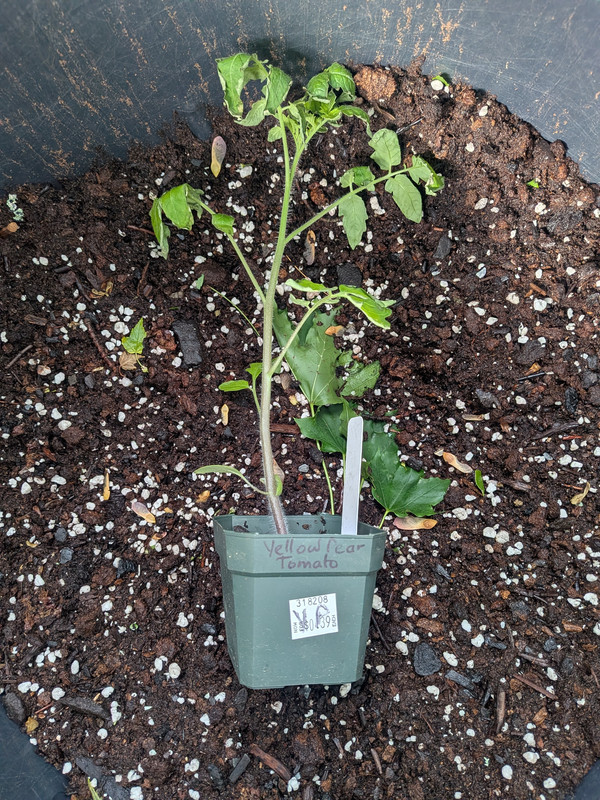
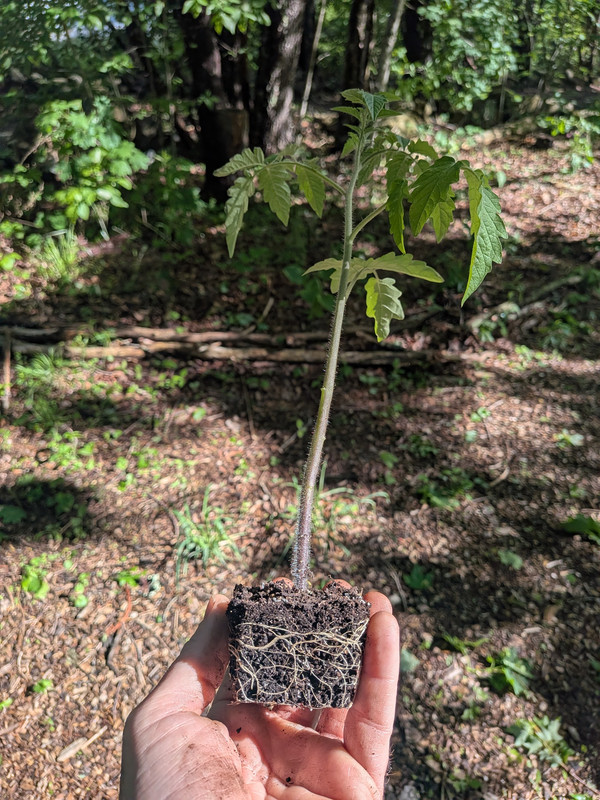
Here we have an example of what we're starting with. The plant itself is about a foot tall, but the pot is only 1.75 inches. The plant itself looks healthy but a little stressed. The square pot helps, but the whole thing is very top heavy. Planted as-is, this plant will need immediate staking and support or it will uproot itself. It will still have to expend energy creating new roots, and will be susceptible to summer heat. Let's move on to repotting.
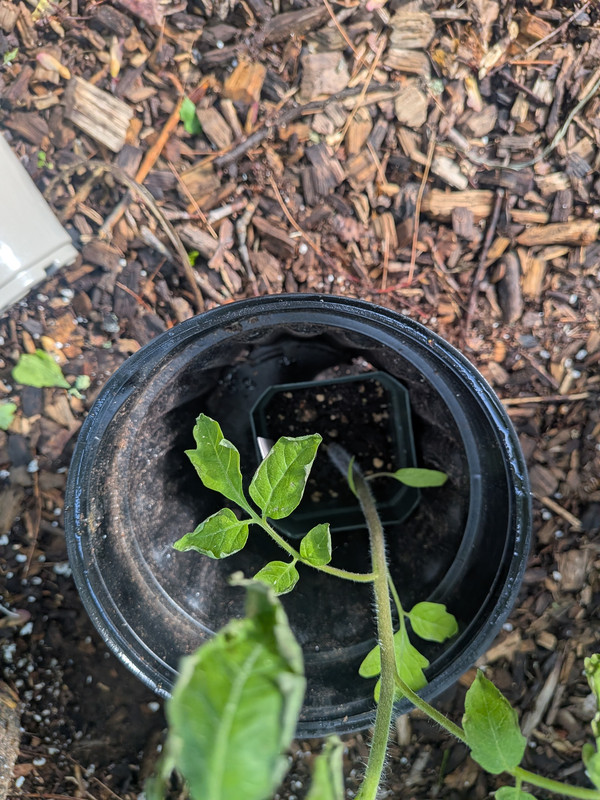
Here's a top-down of our tomato in a 1-gallon pot. We're doing this with the original pot in place so we can determine which leaves will be removed and then safely lift the plant to do the pruning. Once we've pruned off a few leaves we'll place the roots at the very bottom of the pot and then fill the pot with substrate.

So, why do this? Every little hair on the tomatoes is an adventitious root - a specialized structure that will turn into a root in the right conditions. And we've just provided the right conditions. By giving the tomato a larger root ball, we're increasing the amount of surface area from which it can draw water and nutrients to produce tomatoes. This will not only improve the number produced, but also each one's nutritional value.
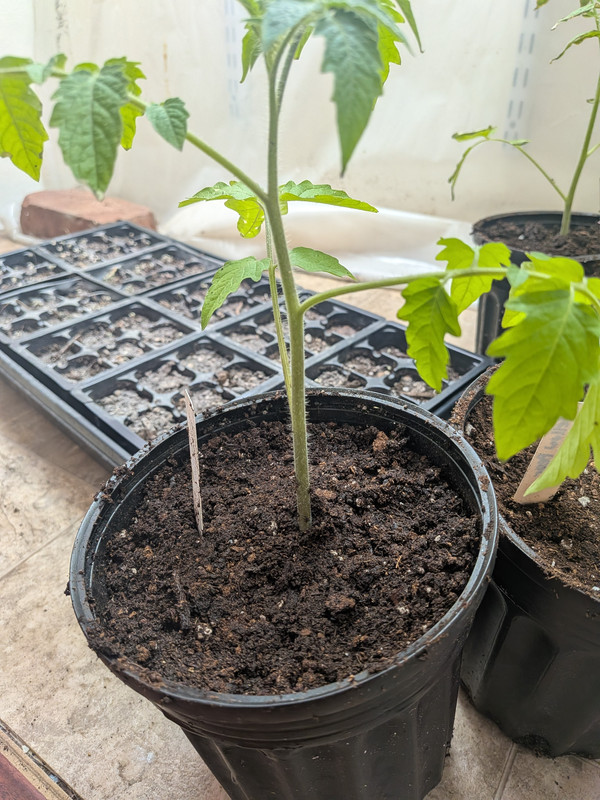
And here we have our plant repotted. It will have the whole week in a greenhouse with folks watering it to grow more roots before the plant sale. If someone asks me for advice on planting it when they get home, here's what I'll tell them:

If you're planting it in a pot, give it at least a 5 gallon pot, but 10 is better. Place the root ball at the bottom of your pot, and fill with your potting mix and fertility. If you're planting it in the ground, bury it as deep as you can, even up to the bottom of the very top most leaves. Then enjoy your tomatoes.

6
19

It's plant sale week where we are! Our library and town food bank are both running plant and bake sale fundraisers this weekend. I've potted up a bunch of native perennials as donations for each, and will be spending my Saturday helping to run the library plant sale.

What's growing on with you all?

7
11

tværpostet fra: https://feddit.dk/post/22185751

In Sweden and Norway, it is called Baldr's brow, but in Iceland, it is the close relative sea mayweed (Matricaria maritima) that carries this name.[12] In Gylfaginning, Snorri Sturluson explains that the name Balder's brow comes from the plants' whiteness

8
28

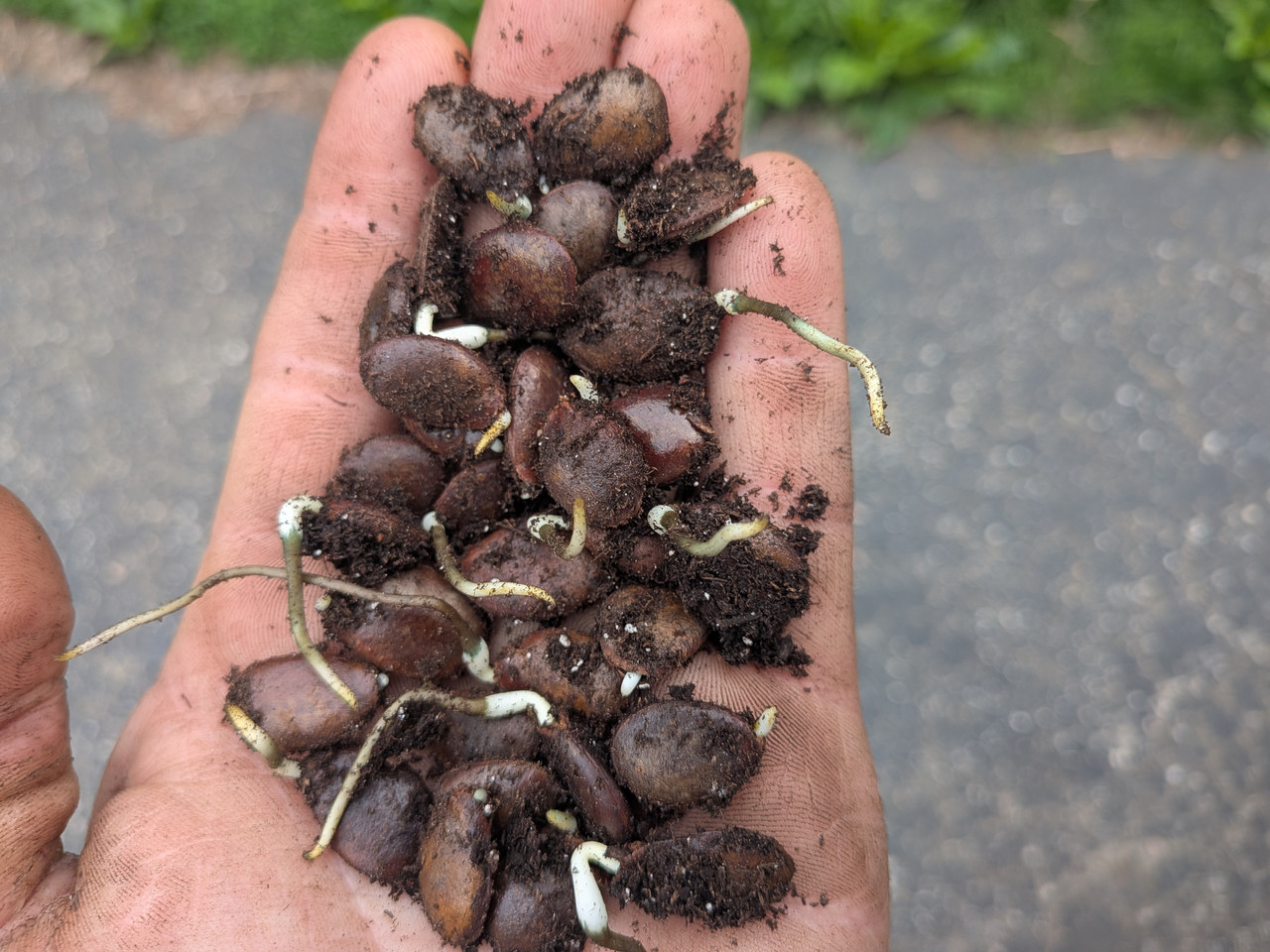
[Image description: roughly twenty American Persimmon seeds show off their taproots in varying stages of development while resting in my palm awaiting their turn to be transplanted]

I'm really excited that these germinated! We got a notice of poor germination tests from the folks we got the seeds from, so they shipped another ounce of seed out to us but far too late to let them naturally stratify over winter. So these bad Larry's got to stratify in our seed fridge through April.
9
21

I finally have passion flower seedlings going strong. Juniper got her own watering can so she can take a more active role in the garden, and loves getting a chance to play with the water and feel like she's contributing.

The cherries and haskaps have finished flowering, but the apples, blueberries, and strawberries are in full bloom.

What's growing on with you all?

10
23
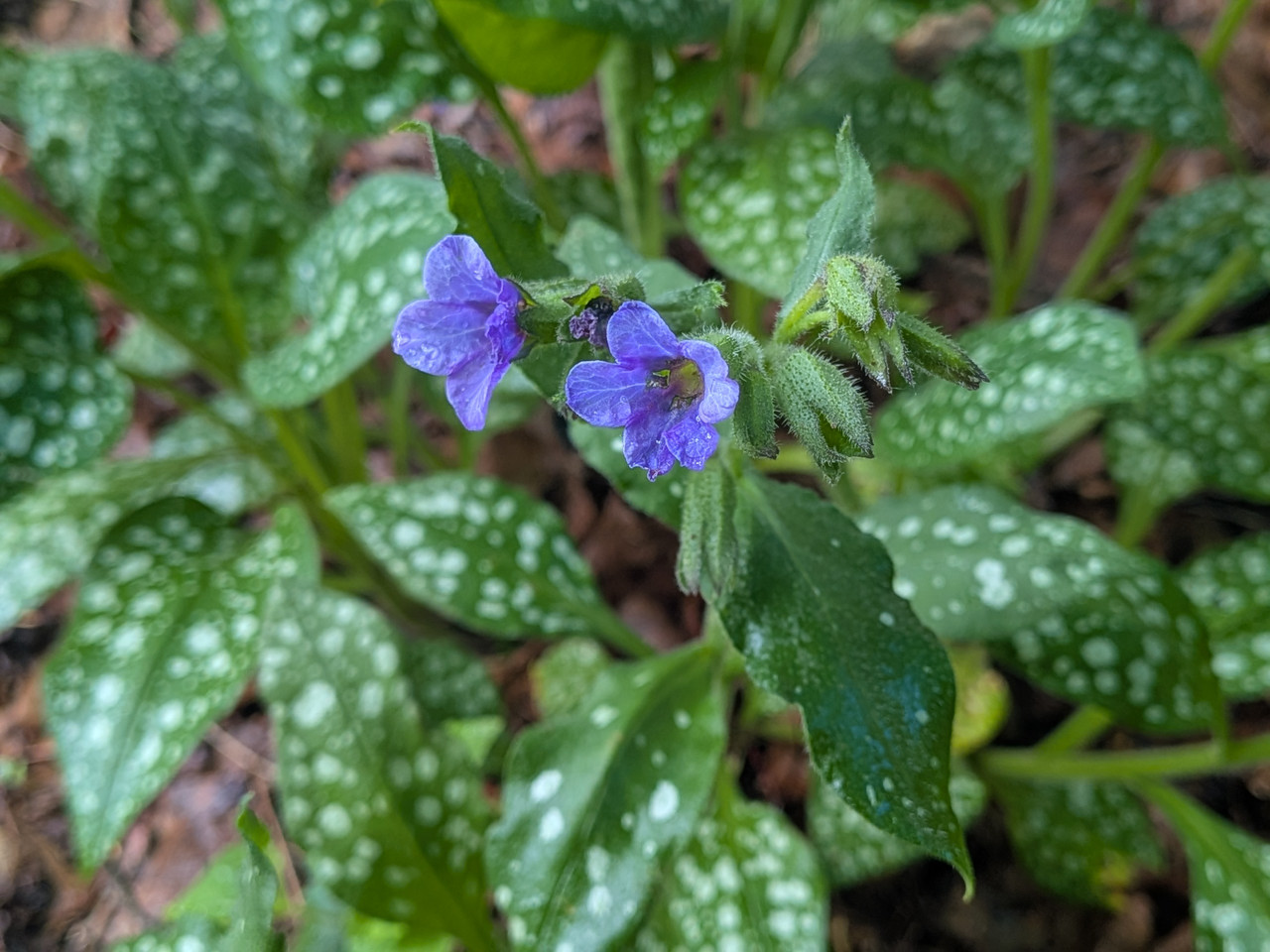
Lungwort in flower (i.postimg.cc)

[Image description: two purplish blue flowers are open above the white-speckled green leaves of lungwort]
11
21

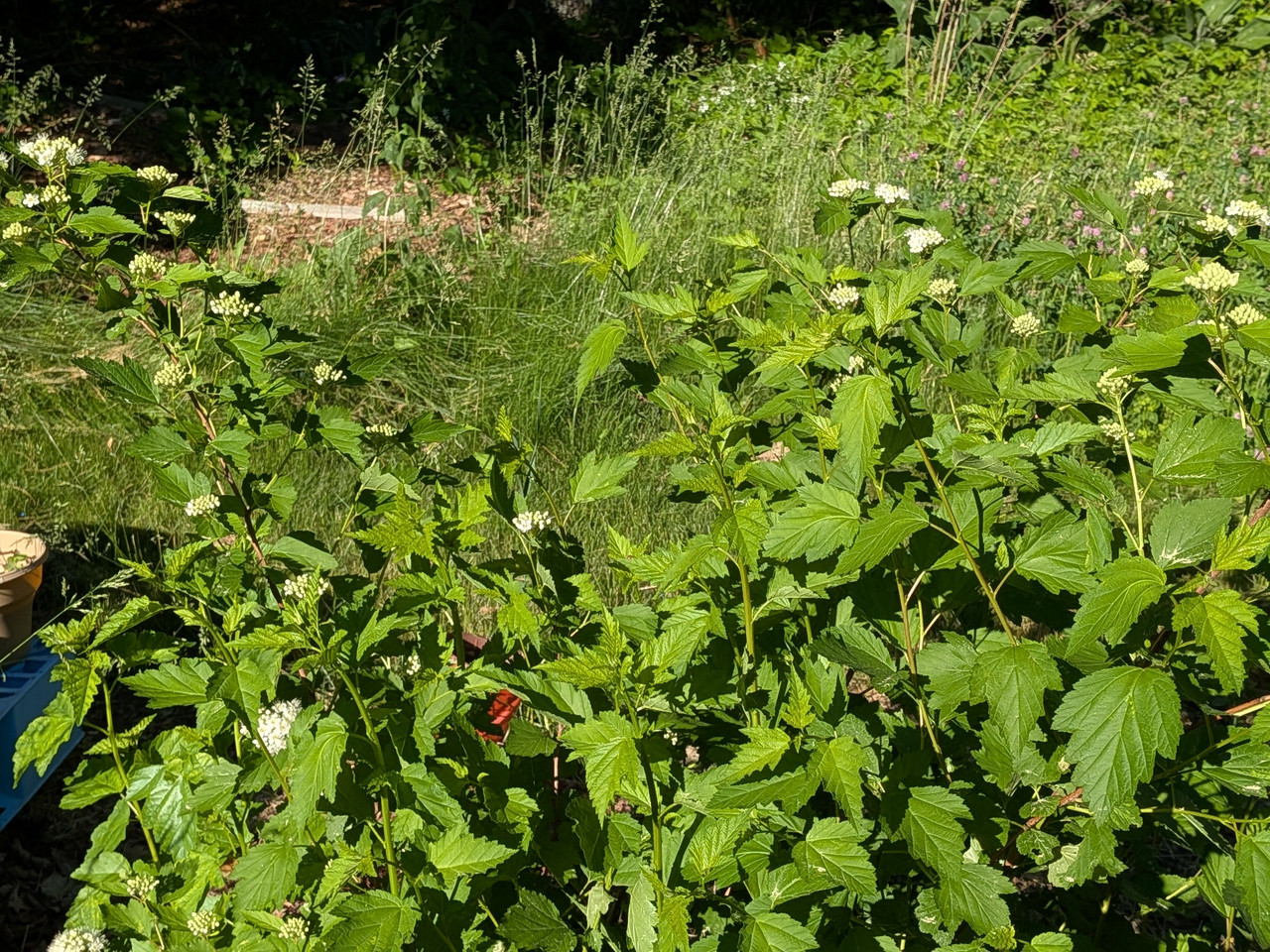
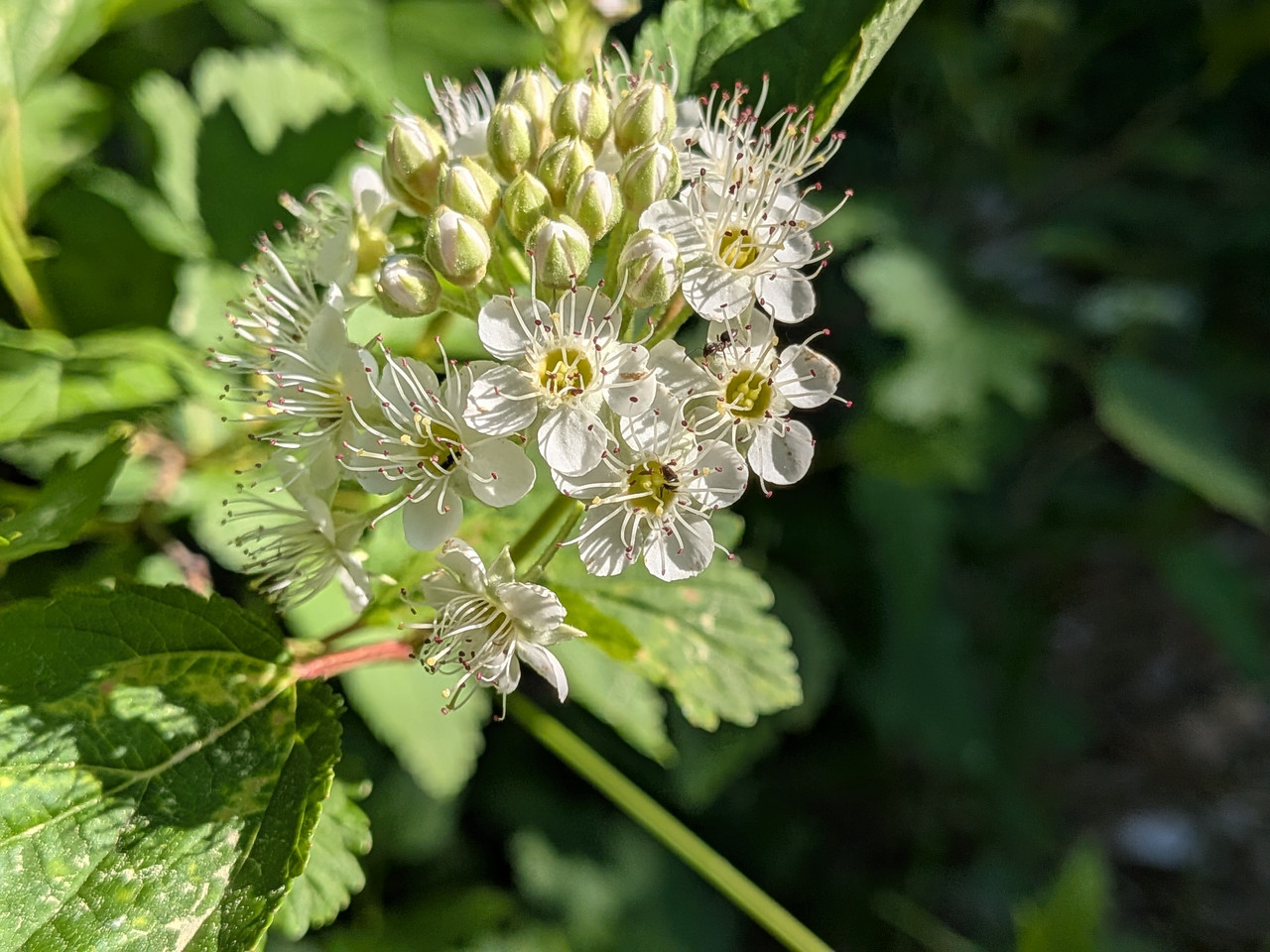
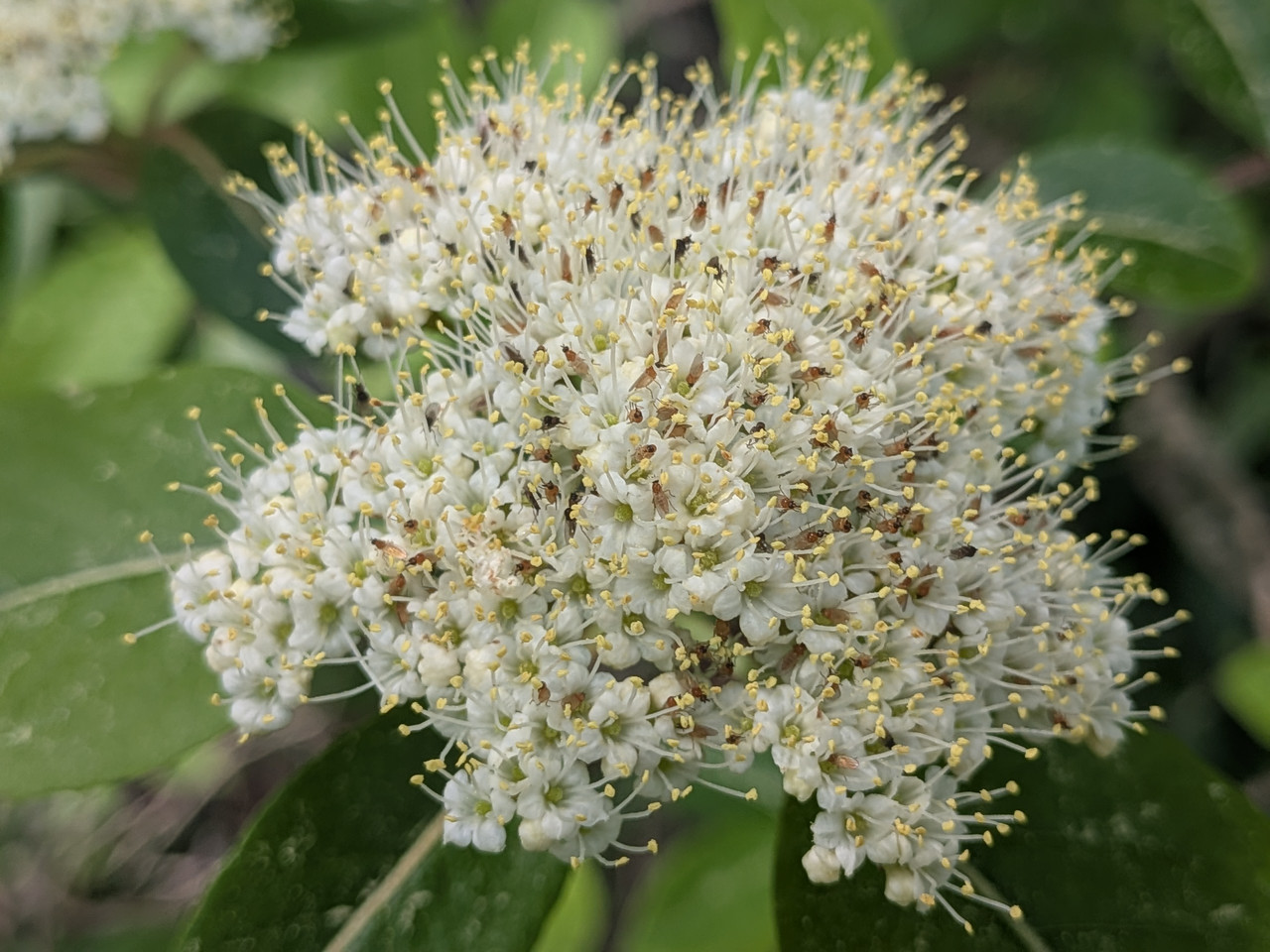
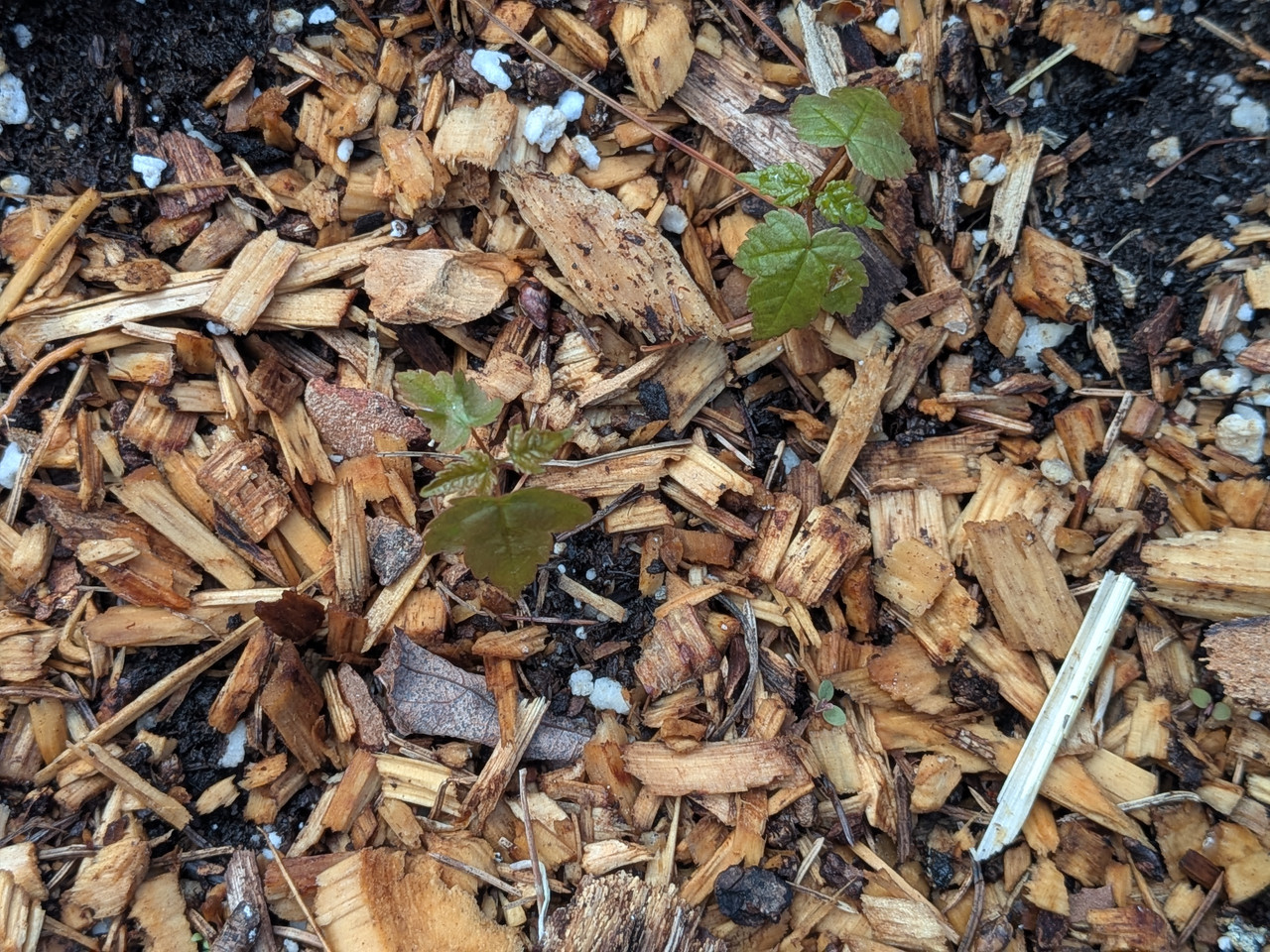
One of the great things about growing all these plants while being a FT SAHD is that literally nothing has plant markers anymore so I get to try to guess whether it's something I'm trying to grow or something I'm happening to grow. All the time.

Here's the clue: this NE US native plant's common name references the plant it resembles.
12
31
submitted 3 weeks ago by luciole@beehaw.org to c/greenspace@beehaw.org
13
17
My Plateau (2026) (beehaw.org)
submitted 4 weeks ago by jay2@beehaw.org to c/greenspace@beehaw.org

Another lemonade day, as a thunderstorm delays my hike and I rearrange my path. It left me with quite a bit of downtime, so I present you with some photo's from last week. Enjoy! or not. Whatever.

Welcome to a tour of my little plateau and woods. This is an ... odd .... piece of property to say the least.

01 / 18

I checked in on the Flower Garden. It was in full bloom. We got (5) clumps of grass and some ferns. I recently transplanted some ... yellow flower ... that was not going to survive where it was. It appears to be happy but hasn't flowered yet. The Chipmonks likely got to the catnip I planted, as they should have been up by now. Damn Chipmonks.

02 / 18

Everything looked to be in good order. No trees fell overnight. It had been pretty windy (check local listings) two days ago. Just (3) years ago, this was all inaccessable. The forest takes things back quickly.

03 / 18

The offerings I left for the Chicadee, Tufted Titmouse, Northern Cardinal, Blue Jay and a pair of White Breasted Nuthatch had long been exhausted. Anything the Eastern Chipmonk doesn't salvage would have been taken by the Wild Turkey, Grey Squirrel, Black Squirrel, Raccoon or White Tailed Deer.

04 / 18

My stinging nettle... So young... They were just 1/8" tall. (7) of them. Gone... It was those damn Chipmonks I say. WHY!!!! Anyway, I still have (3) late bloomers barely an 1/8" tall... I think. Jesus looks after them now.

05 / 18

The Firepit. A technological marvel.

06 / 18

My original was of a solid design that was not built to a satisfactory standard. It did survive it's year, but shale can be problematic, and stone constructs unravel like sweaters so...

07 / 18

Now, redesigned for better airflow. It features a large cold air intake which functions as twin bottom air injectors (presuming you place the logs right) for a more efficient and smoke-free fire.

08 / 18

I can place a battery operated fan into the cooling chamber to increase airflow, if needed.

09 / 18

Ahh. My chair. My happy place. I turn on some Buckethead.

10 / 18

The Stump Garden, as I've been calling it, is finally beginning to bloom. We shall see if it can survive the hot dry climate of summer as the bag insisted it could. A test area to see if anything can still grow. I suspect it can.

11 / 18

It's our native weeds for now along with some grass seed that the birds and rodentia left me. This soil hadn't been visible for decades.

12 / 18

The plateau rises another 50 feet or so. It used to be quite beautiful. I hope to eventually get it back close to what it was. I also made a seperate area for some winter rye. For the deer. We have (3) ladies in my area, and they all look scrawny as fugg.

13 / 18

I travelled up to 'The Sage Of The Woods'. An old stump that I would tell my woeful tales to. I remember when this tree, one of 12 super-massive trees, was freshly cut.

14 / 18

The Sage had nothing to say today so I took the path to the east. It winds along a scenic hillside.

15 / 18

Thats when I spotted it. And worse, It had to have spotted me... The Legendary Beast Of The North Wood! A type of dragon rarely scene.

16 / 18

It's large head glared at me as I passed, though it showed no aggression. Sleeping perhaps?

17 / 18

What a speciman! Mature adult maybe? I walked on, leaving it to it's slumber, and relieved it's not mating season.

18 / 18

So if you are out, walking the trails and exploring old unknowns, understand that you never know what's up ahead and that's what makes nature so cool.

Have fun! Out in it.

14
11
submitted 1 month ago* (last edited 4 weeks ago) by luciole@beehaw.org to c/greenspace@beehaw.org

Video description:

Welcome to the channel! Here, we will be talking about fungus. Subscribe to see more, thank you for stopping in!

15
11

cross-posted from: https://lemmygrad.ml/post/11559349

Family photo: parenting in the animal kingdom | The Narwhal

Doting mates, coddling parents and a touch of tough love; the animal kingdom has a lot to teach us about rearing young.

As a wildlife photographer for 14 years, I’ve had the chance to see these parents in action, and feel the loss of young left to fend for themselves. 

I’ve spied a Cooper’s hawk, watching closely as its parents hunt, so it can one day feed its own family. I’ve seen an eagle drop a fish into a river for an eaglet, when their own angling skills weren’t yet up to snuff.

Perhaps the most relatable scene was a worn out male fox, taking an afternoon nap in the grass, as his kits rough-housed nearby.

From the fields, rivers and skies of Ontario, here are some of my favourite family portraits.

A Cooper's hawk flies from a tree with a small branch in its talons

As they mature, the eyes of Cooper’s hawks change colour from brown to orange to red. A pair has been hunting in the woods behind my apartment for the past few years, and last year they were joined by a hatchling.

A Cooper's hawk sits on a branch, looking at the camera

A Cooper's hawk with a brown-feathered back flies from a branch

A young Cooper's hawk sits on a branch

The young Cooper’s hawk spends time watching the adults dart between tree branches to capture mourning doves, mice and even squirrels. This is a skill it will need to survive.

A kingfisher flies in front of a rock wall with a small fish in its beak

In the seven years I’ve been visiting the Nith River in Ayr, Ont., belted kingfishers have nested in a sandbank. When there are young in the nest, the adult male is busy delivering fish and crustaceans to them. Often he will perch on a nearby tree before deciding to enter the nest — a security precaution, to keep their location hidden from predators.

A young sandhill crane and two adults fly in front of trees

Two sandhill crane couples I know of return to their nesting areas south of Cambridge, Ont., each spring. Both pairs laid eggs in 2024. One pair’s nest was flooded and abandoned, but this other couple successfully raised a young one, called a colt. They forage close to the nest when the colt is young, but it will eventually be strong enough to fly with its parents.

A cluster of sandhill cranes gather around a small creek through farmers fields

Each December, sandhill cranes, both young and old, gather in fields along the shore of Lake Erie for migration, although some will remain in Ontario through the winter.

Deer families traditionally include a doe and her offspring from recent years, and they’ll sometimes join with others to form a larger herd. One winter, while wandering across a path, I had the feeling I was being watched. When I turned around I spotted this doe with two fawns.

Three deer stand on a snowy trail

Another mother and fawn approach the Grand River in Brantford, Ont., for a drink. I would often see them crossing the river here.

A mother and baby deer stand at the edge of a lake with purple flowers and forest behind them

A peregrine falcon with a tag on its leg flies towards the camera

Peregrine falcons are the world’s fastest animal, using their roughly 300-kilometre-per-hour flight speed to capture birds much larger than themselves. A pair took up residence on the roofs of two churches in downtown Cambridge, Ont., in 2023 and 2024. They were attracted no doubt by an abundant supply of pigeons and gulls close by.

A peregrine falcone swoops down from a rooftop under blue sky

A peregrine falcon takes off from a rooftop with a partially eaten rodent in its talon

In the spring of 2024, the pair were joined by one of their offspring, seen on the left, which noisily chased the adults whenever they caught a pigeon. I noticed the adults didn’t like to share, but the young one would feed on scraps until her hunting skills were perfected.

A young black bear peeks out from behind a tree

Black bear cubs normally remain with their mothers for roughly a year and a half. This cub was foraging in the woods surrounding Killarney, Ont., with no siblings and no mother in sight. There was an extraordinarily high number of orphaned cubs that year and the Ontario Ministry of Natural Resources couldn’t possibly rescue all of them. A weight limit of 15 kilograms was set, with cubs believed to be below that number targeted for capture and care at a sanctuary. After sharing my photos with one of the ministry’s bear technicians, this one was deemed to be a healthy weight with the potential to survive the winter on its own. A few weeks later I was told by locals they had seen two cubs scavenging at the Killarney town dump. Hopefully, this one made it through the winter.

A bald eagle swoops down while one eagle watches on and a young one screams from the nest

In spring, an adult female bald eagle lays her eggs in a nest constructed with moss, twigs and tree branches snapped from nearby trees. She spends up to 35 days on the eggs, only occasionally getting relief from her mate to stretch her wings — always in the vicinity of the nest. The adult male is the constant provider, delivering food to the nest. When the eggs hatch, his hunting activity is frantic, and the eaglets quickly grow.

From what I’ve seen, each year, one of the fledglings will remain dependent upon the adults for food, even after his or her siblings have left the territory to fend for themselves.

A bald eagle flies low over the water, with a splash below its talons where it picked up a fish

Adults will continue to feed this eaglet, dropping food in the vacated nest or on tree branches close to the nest. Once I watched the adult male drop an enormous northern pike into the river below a begging eaglet. It was an illustration of what good parents these eagles are.

Am adult eagle feeds a young eagle beak to beak

A young moose with patch of fur missing on its back walks across a paved road

A cow moose is a devoted mother and will care for her calf throughout most of its first year — but after that, tough love kicks in. This solitary calf photographed in May 2024 has, in all likelihood, been cast out by its mother so she can prepare to birth another calf.

An adult great horned owl sits on a branch, surrounded by shrubbery, looking straight at the camera

Over a few weeks of observation, I saw this male great horned owl bring squirrels, birds and half-eaten rabbits back to feed both his mate and one owlet, which was hidden in the trees. The adult waited for me to back away before taking the meal to his offspring, likely to keep its location secret.

A young great horned owl perches on a tree branch, looking straight at the camera

The young one was reliant upon its parents as it dared to only fly short distances between neighbouring trees.

A night heron balances on a stick over water

Black-capped night herons fish along the edges of ponds and rivers. This adult night heron preferred hunting for small fish in the shadows along the Speed River, in Cambridge. Her two offspring have learned to hunt from their mother, but found it easier near a dam on the river where fish might gather.

Two night herons sit on sticks above clear glass water

Over time the young herons will lose their brown markings and eventually take on the appearance of an adult — white breast, black-capped head and wings.

While his mate was tucked away in a den giving birth and then caring for the tiny pups, the adult male coyote was the sole provider for his family.

A coyote's head pops up above tall grass

Although I suspected the location of their den, near Paris, Ont., I kept my distance. After a couple of months of parental supervision, the three pups began venturing out and exploring the area.

Young coyotes walk down a gravel road

As the pups grew in size, they also answered the calls of their parents to meet down by the Grand River.

A young coyote crosses a gravel road

A kestrel flies over dry grass

Kestrels are the smallest member of the North American falcon family. Fully grown, they are about the size of a mourning dove. Over the month of April 2022, this adult female became used to me standing at the side of the road photographing her each evening as she hunted insects and mice.

A kestrel flies over dry grass

I didn’t see her over the following months and realized she was probably nesting somewhere. When she did eventually return it was with three young ones, none of which were as bold as her. They kept their distance.

A young fox sits in the grass and peers at the camera

A young fox looks back at the camera while standing in grass

Two young foxes play in the grass

For much of 2020, a red fox could be seen hunting behind my apartment building. In the summer and fall, two kits turned up, often playing together. Feeding the growing kits was a lengthy and apparently tiring process for the adult male, who would regularly take a 20-minute afternoon nap in the grass undisturbed by the sound of my camera clicking away.

16
11

tværpostet fra: https://feddit.dk/post/21663249

🫵🫵☠️‼️🚨🍄🤮 Always be careful when identifying and foraging for mushrooms 🤮🍄🚨‼️☠️🫵🫵

The mushroom is known for its unique growth pattern, often forming arcs or circles called fairy rings.

The fairy ring mushroom’s common name is derived from the folklore surrounding the circular patterns in which it grows. These patterns, known as fairy rings, have been associated with magical creatures and supernatural phenomena in various cultures throughout history. The mushrooms’ unique growth patterns and ability to regenerate after drying out have contributed to their mythical status.

There is a big problem with the common name of this mushroom. It is “the” fairy ring mushroom but not the only mushroom that grows in fairy rings. Quite a few other mushrooms form fairy rings, actually, including the meadow mushroom and the false parasol.

The best thing to do is, once identifying them with certainty, is to harvest them for the table and thank Mother Nature for the bounty!

Besides being a fruitless effort (they’ll always come back), some people say destroying a fairy ring is unlucky. It is believed that fairy ring mushrooms bring good luck and that they are indication that there is a fairy village underground. Another folkloric story says you should never step into a fairy ring, as it will make you invisible or you’ll become trapped there forever.

17
12

I've spent the last month removing and replanting pretty much all of our foundation plants (things around the house) in advance of some pretty serious work on our home, which has left little time for planting all my annuals. I'm hoping I've got the ability to get more veggies in the ground once the work starts next week

18
67

Part of a fairy ring in our garden. The difference in grass growth between where the mushrooms grew last year vs this year is especially visible this year.

19
48

Marigolds, alysums, grafted tomato-potato hybrids, onions, thyme, basil, and once I place the cages around some pinto beans.

20
41
submitted 1 month ago by Fourth@mander.xyz to c/greenspace@beehaw.org

21
48

we planted some beans from last year's harvest. they're indoors now because of freezing

22
27
submitted 1 month ago by loopy@lemmy.today to c/greenspace@beehaw.org

https://i.postimg.cc/pTQLbmWq/IMG-3529.jpg

https://i.postimg.cc/rmGwXDVx/IMG-3530.jpg

https://i.postimg.cc/qRcvVNJ1/IMG-3531.jpg

I recently transplanted this vine and it seems to be struggling. This one had roots to start with, so should I put it in water first for a few days or straight into soil?

From what I have read, it does not need too much water and in fact should not be overwatered. I also saw that it does not prefer direct sunlight. The yellow on the leaves closer to the roots can mean overwatered but yellow in all leaves can mean malnourished. I pur it in new “moisture control” potting soil.

The burnt leaves can mean too much direct sunlight, so I moved it to a bookshelf away from the window, but that didnt seem like enough light.

I’m kind of at a loss here. Do I need to do something different or just give it time to heal from transplanting? Any insight is appreciated.

23
46
submitted 2 months ago by Hirom@beehaw.org to c/greenspace@beehaw.org
24
36
Overgrown trees (lemmy.blahaj.zone)
submitted 2 months ago by CoachDom to c/greenspace@beehaw.org

Hi there I have a few really tall trees in my garden which are overgrown with assorted vines. Is it necessary for me to cut them at the trunk (at least some of them) to keep the trees in good health? Thanks

25
10

cross-posted from: https://startrek.website/post/37077490

Whatever the actual weather may be where you are, this Blender creation by visual artist @toolbrowny (on YouTube) aka shanedioneda.com, may give you a spring experience.

view more: next ›

Nature and Gardening

8369 readers
75 users here now

All things green, outdoors, and nature-y. Whether it's animals in their natural habitat, hiking trails and mountains, or planting a little garden for yourself (and everything in between), you can talk about it here.

See also our Environment community, which is focused on weather, climate, climate change, and stuff like that.

(It's not mandatory, but we also encourage providing a description of your image(s) for accessibility purposes! See here for a more detailed explanation and advice on how best to do this.)


This community's icon was made by Aaron Schneider, under the CC-BY-NC-SA 4.0 license.

founded 3 years ago
MODERATORS