355
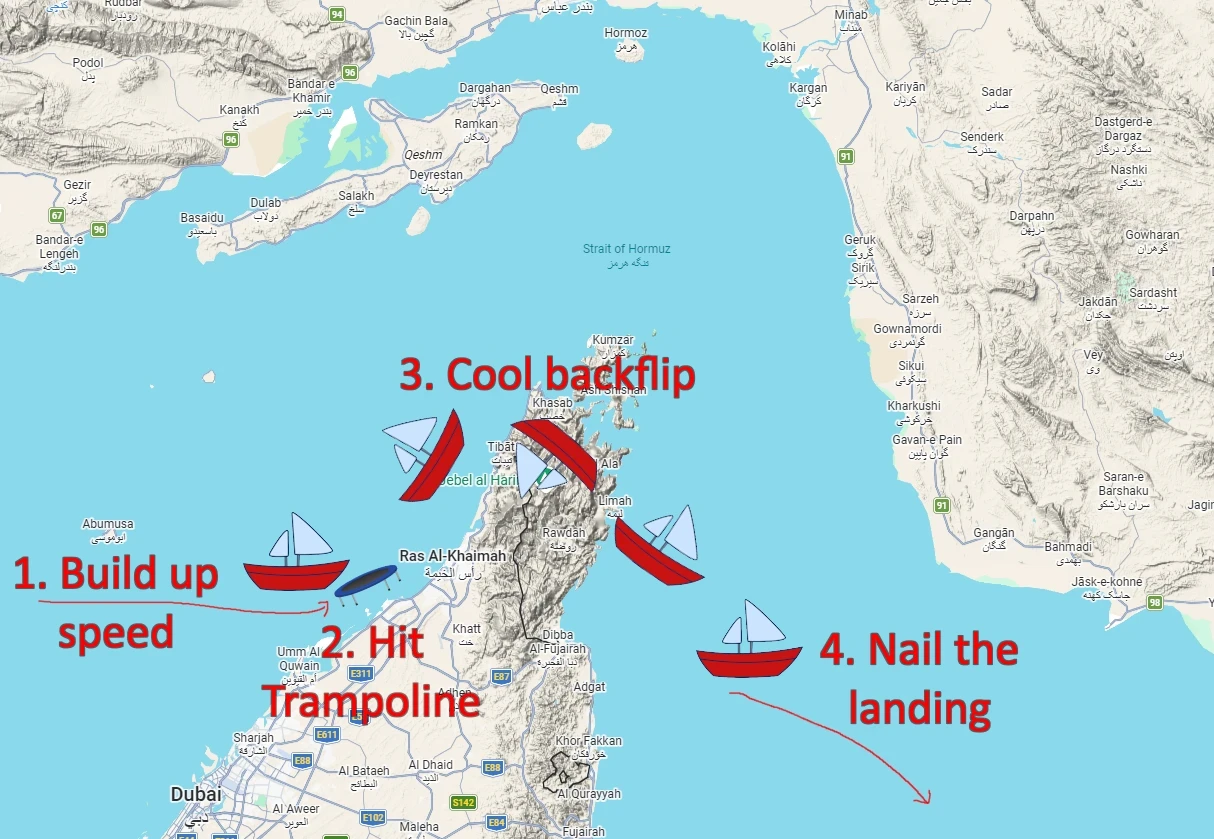
The Bounce of Hormuz
(media.piefed.world)
Militaria shitposting central! Post memes, tasteless jokes, and sexual cravings for military equipment and/or nuclear self-destruction!
Rules:
If you see these please report them.
Related communities:
!forgottenweapons@lemmy.world
For the other, slightly less political NCD, !noncredibledefense@sh.itjust.works

Depends on the "different points" and how you define their positions:
If they were "at sea level" meaning average sea level, water would flow in one and out the other depending on which level was actually higher at that moment due to tides etc.
If they were "at sea level" meaning the actual level of the sea at that point at that moment (essentially floating), it'd be a pretty boring result because no water would flow.
If one portal were at significant depth, the high pressure would cause a strong stream to spray out of the other portal. If it were also underwater itself or at the surface pointed horizontally, it would create a strong current. If it were at or near the surface pointed up, a fountain or geyser. If it were pointed at the shore or bottom, it would carve a canyon. Also, a whirlpool might form at the surface above the inlet portal.
Finally, in any of the above cases various nutrients and/or marine life might be transferred between locations, potentially exacerbating problems with invasive species or causing an algae bloom or something like that.
I was imagining potential weather-related upsets due to temperature differentials and tides and things, but that would likely require very large portals. Maybe a better / more interesting question is, how large would the portals have to be for this to start having this types of effects?