100
you are viewing a single comment's thread
view the rest of the comments
view the rest of the comments
this post was submitted on 16 Mar 2025
100 points (100.0% liked)
Fairvote Canada
883 readers
1 users here now
What is This Group is About?
De Quoi Parle ce Groupe?
The unofficial non-partisan Lemmy movement to bring proportional representation to all levels of government in Canada.
🗳️Voters deserve more choice and accountability from all politicians.
Le mouvement non officiel et non partisan de Lemmy visant à introduire la représentation proportionnelle à tous les niveaux de gouvernement au Canada.
🗳️Les électeurs méritent davantage de choix et de responsabilité de la part de tous les politiciens.
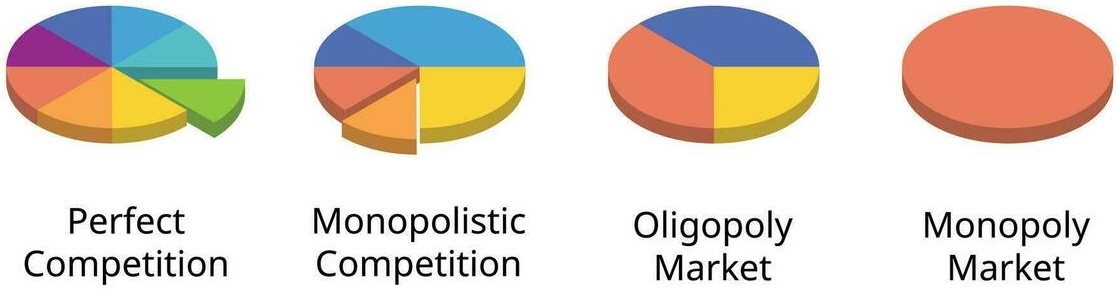
- A Simple Guide to Electoral Systems
- What is First-Past-The-Post (FPTP)?
- What is Proportional Representation (PR)?
- What is a Citizens’ Assembly?
- Why Referendums Aren't Necessary
- The 219 Corrupt MPs Who Voted Against Advancing Electoral Reform
Related Communities/Communautés Associées
Resources/Ressources
Official Organizations/Organisations Officielles
- List of Canadian friends of Democracy Bluesky
- Fair Vote Canada: Bluesky
- Fair Voting BC: Bluesky
- Charter Challenge for Fair Voting: Bluesky
- Electoral Renewal Canada: Bluesky
- Vote16: Bluesky
- Longest Ballot Committee: Bluesky
- ~~Make Votes Equal / Make Seats Match Votes~~
- Ranked Ballot Initiative of Toronto (IRV for municipal elections)
We're looking for more moderators, especially those who are of French and indigenous identities.
Politiques de modération de contenu
Nous recherchons davantage de modérateurs, notamment ceux qui sont d'identité française et autochtone.
founded 2 years ago
MODERATORS
I appreciate your thoughts on electoral reform, though I'd like to address some misconceptions about PR systems and explain why RCV alone doesn't solve our fundamental electoral problems.
First, it's important to clarify that RCV (what you're referring to) is typically implemented as Instant Runoff Voting (IRV) for single-member districts. IRV is still a winner-take-all system that fails to ensure proportional representation. While it eliminates the spoiler effect, it still discards many votes and produces results where seat percentages don't match vote percentages.
Read more: A Simple Guide to Electoral Systems
You raise concerns about regional representation and accountability under PR:
Regional representation: Many PR systems, particularly Single Transferable Vote (STV), maintain strong regional representation through multi-member districts. Representatives still have geographic constituencies, but districts elect multiple MPs proportional to votes cast. This actually improves regional representation as more diverse viewpoints within each region are represented.
Party loyalty vs. local concerns: Under our current FPTP system, party discipline is already extremely tight. PR systems like STV actually give voters more power to choose between candidates of the same party, potentially reducing party control. In Ireland's STV system, for example, representatives actively compete with party colleagues for voter preference, increasing accountability to constituents.
Accountability: Your question "who do voters complain to?" has a simple answer under PR: they have multiple representatives from their district. This creates more avenues for constituent services, not fewer. In fact, having multiple representatives per district means voters are more likely to have at least one MP who shares their political values.
Improved democracy: PR objectively improves democratic representation. Under our current system, millions of perfectly valid ballots have zero effect on representation. In rural areas like Hastings-Lennox and Addington, over 51% of voters had their votes completely discarded in the last election. That's not a "minor dysfunction" - it's a fundamental democratic deficit.
If combining ranked ballots with geographic representation appeals to you, I'd strongly recommend looking into STV, which accomplishes both while ensuring proportional representation. It gives voters the ability to rank candidates while ensuring that the overall makeup of Parliament reflects how people actually voted.
The core principle at stake is simple: in a democracy, we are deserving of and entitled to representation in government. Any system that systematically discards votes, as both FPTP and IRV do, undermines this principle. Only proportional representation ensures that vote percentages match seat percentages - the mathematical foundation of fair representation.
I appreciate your thoughtful response. Let me address each point:
IRV (Instant Runoff Voting) is indeed a form of ranked choice voting, but this doesn't change its fundamental nature as a winner-take-all system. While it allows you to vote sincerely for your first choice without fear of "wasting" your vote, it still results in only one candidate winning per district, meaning many voters remain unrepresented.
The key difference is that in winner-take-all systems like IRV, a significant portion of ballots (often 40-60%) don't elect anyone at all. These votes are effectively discarded. In PR systems, virtually all votes contribute to electing someone who shares the voter's values.
Regarding "party identity" versus independent candidates - this is a common misconception about PR. Systems like Single Transferable Vote (STV) actually make it easier for independents to win seats compared to FPTP. In Ireland, which uses STV, independents regularly win seats. The key is having a reasonable threshold and multi-member districts.
As for local representation, both STV and MMP maintain geographic connection while ensuring proportionality. Under STV, each region has multiple representatives reflecting the diversity of political viewpoints in that area. This provides better regional representation, not worse, as voters are more likely to have at least one MP who shares their values.
The voting reform committee didn't "derail" RCV - they actually studied various systems extensively and recommended PR because it better fulfills the democratic principle that all citizens deserve equal representation. This wasn't dysfunction; it was evidence-based policy making. Trudeau rejected their recommendation because he preferred IRV, thereby breaking his promise to have 2015 be the last election under FPTP.
The fundamental question remains: In a democracy, shouldn't every vote contribute meaningfully to representation, regardless of where you live or who you support? Only PR consistently delivers this basic democratic principle.