It can be hard to find order in the chaos of an Overwatch 2 Stadium game. The ability to distinguish between what brightly coloured mess of colours is good and bad at a moment's notice can be a hard one to master. And now you have to deal with all the various hero Powers and item abilities—it's one hell of a ride.
Stadium brings a new style to Overwatch 2, offering shorter fights, more rounds, and a power creep (which is more of a power rush) when you get to late-game fights. There's currently a limited roster, but with every season more heroes get added, each bringing more game-changing powers and abilities with them.

2025 games: This year's upcoming releasesBest PC games: Our all-time favoritesFree PC games: Freebie festBest FPS games: Finest gunplayBest RPGs: Grand adventuresBest co-op games: Better together
"We have quite a few planning meetings as a group where we go through the list of options, then look for gaps in like playstyles and archetypes that exist currently in Stadium that we think would add a lot," senior game designer, Dylan Snyder, says.
Next season's heroes exemplify this. With Brigitte being a brawly Support and Pharah being one of the few airborne heroes, both bring something different to the mode. "Characters like that, who have a lot of chaos as part of their kits, are really exciting to bring into Stadium where chaos is the menu item of the day," Snyder says. But the most chaotic addition this season, and perhaps of all time is already here—I'm talking about Junkrat.
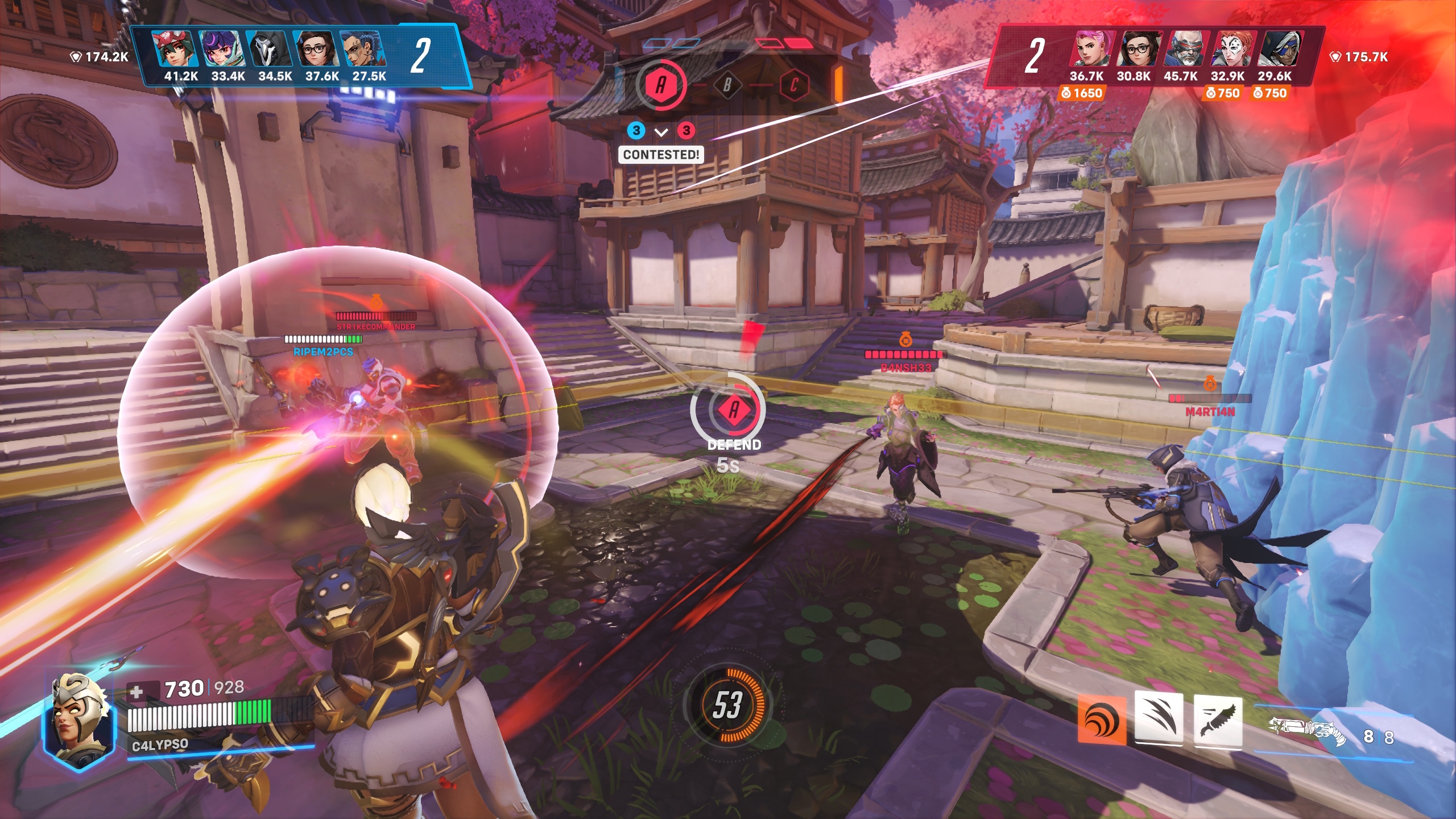
"I think the first time we ever played Junkrat in Stadium with the whole team, there were just bombs everywhere," senior game designer, Conor Kou, says. "And we were like, 'Okay, this is a little much.' He's one of those characters where chaos is just part of his fantasy. So we wanted to play into that a bit. We're trying to see how far we can push it."
(Image credit: Blizzard Entertainment)
I've encountered plenty of Junkrats in Stadium this week, and while it hasn't been quite as bad as Kou's ordeal, it's still been an experience to remember. Some of Junkrat's Powers are absolutely hilarious—I got the scare of my life the other day when a Junkrat popped out of an exploding RIP-Tire like a jack-in-the-box.
At times, Junk's rate of fire increase abilities coupled with Powers like the above make the hero feel more 'chaotic evil alignment' than anything resembling fair game. "That's how we design them, too," Snyder jokes. "What's the most chaotic evil thing we can make? That's like, a Conor speciality."
We want to make things more chaotic. We want to build that power fantasy that you can experience.
Conor Kou, senior game designer
Evil chaos may sound like a lot of fun on paper, but in actuality, there does need to be a line drawn before a hero gets too powerful or unpredictable and begins to dominate lobbies.
"It's something that we're always trying to keep an eye on with any of our heroes," Kou says. "We want to make things more chaotic. We want to build that power fantasy that you can experience over the course of a Stadium game. But if the chaos starts to overtake all of that, then that's something we have to peel back on."
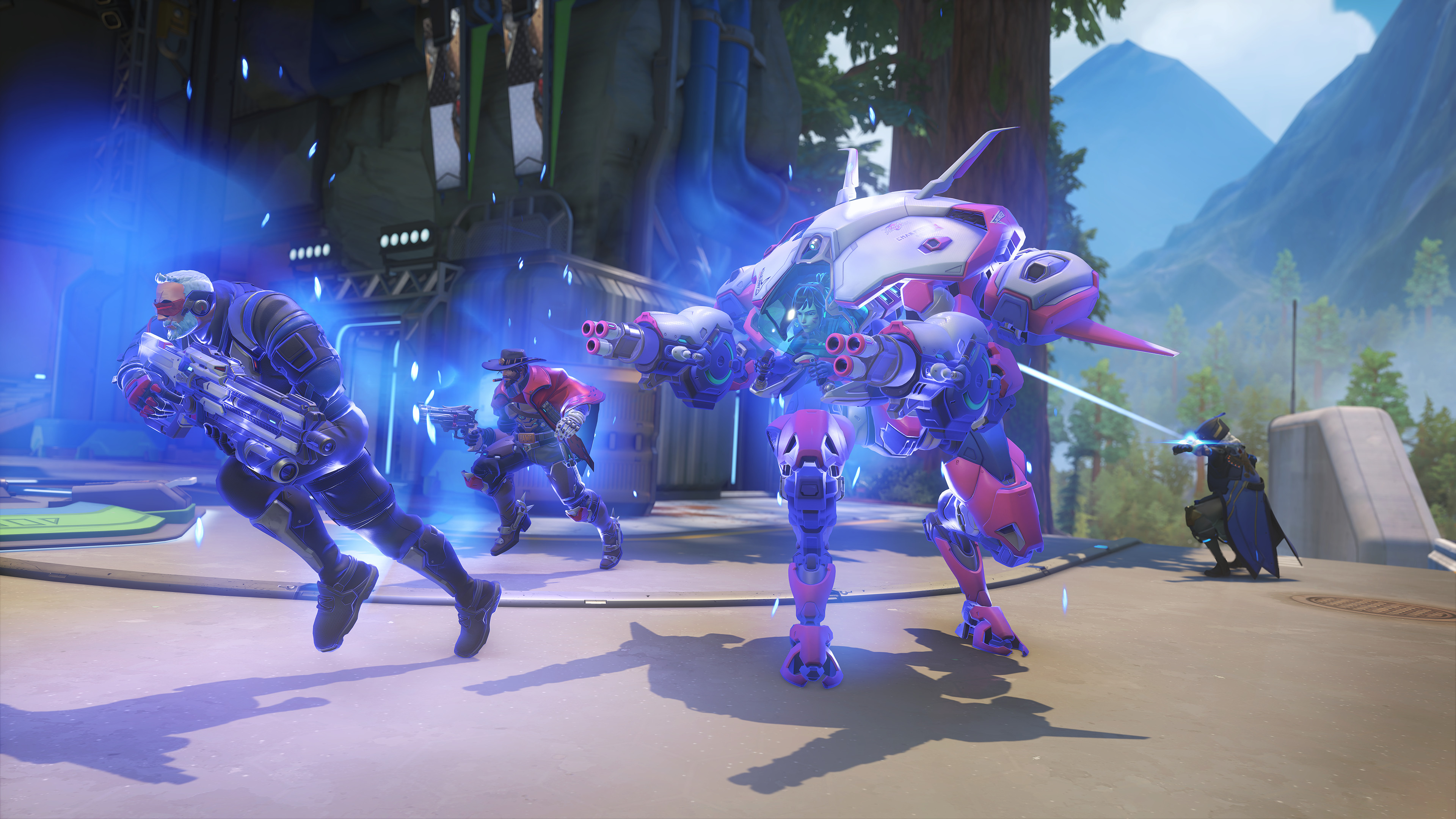
At its best, Stadium can feel like two teams of gods fighting each other. Chaotic and powerful abilities swirl around as everyone scrambles for control over the objective. It can be thrilling, and provide some of the most exciting moments I've experienced in Overwatch. At its worst, Stadium can feel overwhelming.
(Image credit: Activision Blizzard)
Since its launch, there have been numerous heroes who have (and continue to) run the meta. A Mercy pocket on a hitscan hero is predictably awful to play around, as she can essentially buff a mid-tier player with her damage boost. Freja spent her first few weeks in Stadium absolutely running amok with zero damage falloff, and is still a pain to play against even after being nerfed.
But the devs continue to balance all the heroes to the best of their ability, and keep an eye out for anyone who gets too strong. "We're always keeping an ear out and listening to feedback," Kou says. "Our goal for Stadium is that we want to have a variety of viable builds, and, of course, viable heroes. We want you to be able to play your hero in lots of different ways. That's one of the reasons we've made such frequent updates."
These frequent updates have also been made in conjunction with more developer blogs and videos with the team. "It's been super important for us with Stadium to almost over-communicate as much as possible with the community," Snyder says. "I think we saw it as an opportunity to start fresh. It's kind of its own beast, and we could treat it that way, in how we update the community, how we interact with them, and how we engage and act on their feedback."
From PCGamer latest via this RSS feed